
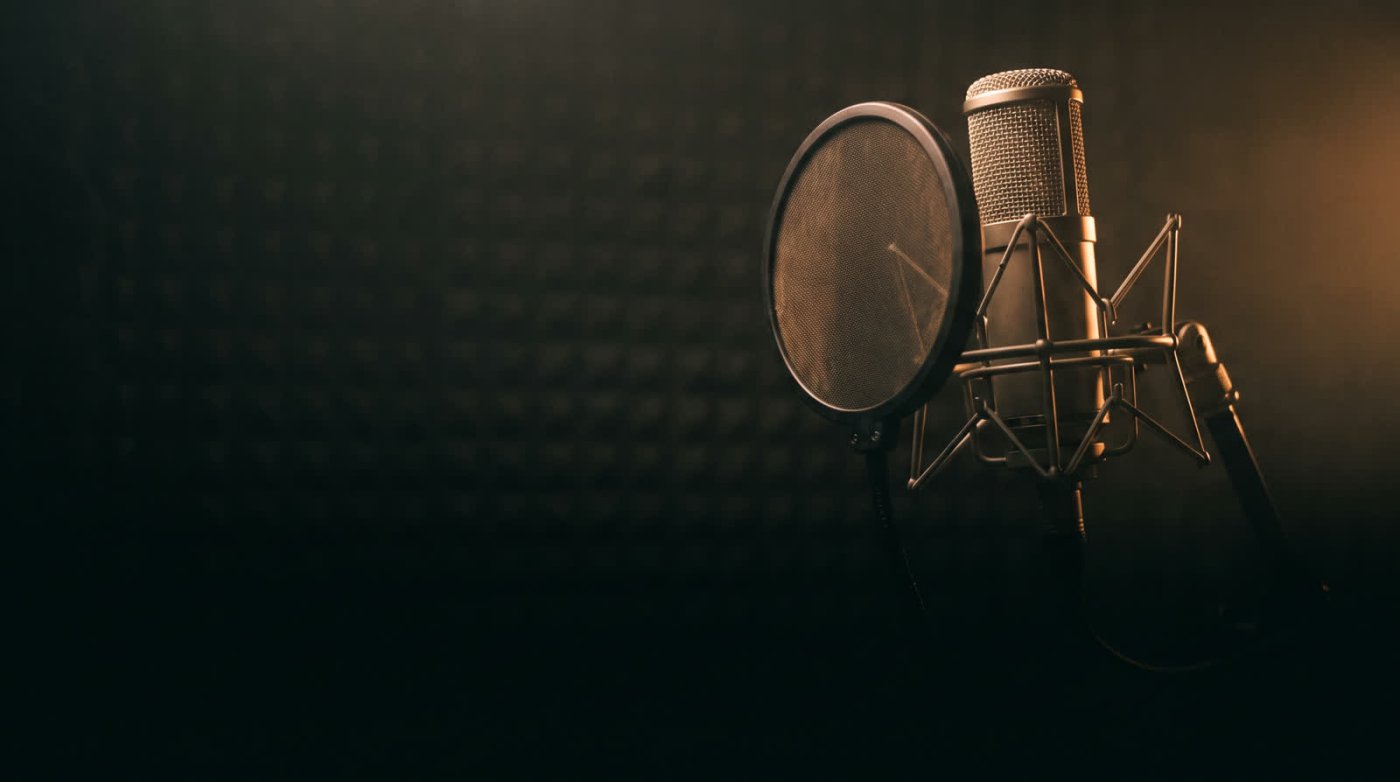
Choosing a microphone when you're starting out is tricky, and the internet doesn't help: every list disagrees, every forum has a favourite, and the prices run from a nice dinner to a used car. You can't buy a mic on looks, and you can't buy one on price in either direction. The right mic is the one that suits your voice, your room and the work you're going for.
That said, five microphones come up again and again when working voice actors, studios and engineers are asked what they actually use. Here they are, cheapest first, with what people like about each and what to watch for. Prices are rough US figures and they move, so check before you buy.
The five, by price
- Audio-Technica AT2020Condenser. The entry point for a huge number of working voices.around $100
- Rode NT1, 5th genCondenser. Nearly silent, neutral, XLR and USB on the back.around $250
- Shure SM7BDynamic. The broadcast mic that forgives the room. Needs gain.around $400
- Sennheiser MKH 416Shotgun. Trailers, promos, presence, and it ignores the room.around $1,000
- Neumann TLM 103Condenser. The voice over mic. Everything comes through, room included.around $1,100
Audio-Technica AT2020
Around $100. A cardioid condenser designed for vocals in project and home studios, and the entry point for a huge number of working voices. It gives a rich, rounded, commercial sound that punches well above its price, and the cardioid pattern rejects a fair amount of what's happening behind and beside it. Needs an interface with phantom power, or get the USB version if you'd rather skip the box.
- Why people like it: the price, the sound for the price, and how little it needs from you. It just works.
- Watch for: it's honest, so a poor room shows. Treat the space.
Rode NT1 (5th generation)
Around $250. On almost every "best voice over mic" list for good reason. A large diaphragm condenser with a self-noise so low it's practically silent, which matters more in voice over than in music because there's nothing to hide the hiss behind. Neutral, detailed and flattering to most voices. The current version has both XLR and USB outputs, so it works before and after you buy an interface.
- Why people like it: the quietness, the price for what it is, and that it doesn't add a flavour you'll be fighting later.
- Watch for: like any sensitive condenser, it hears the fridge. Room first.
Shure SM7B
Around $400. The broadcast dynamic. Radio has used it for decades, podcasting made it famous, and voice actors with less than perfect rooms swear by it, because a dynamic mic is far less interested in the room than a condenser is. It's smooth, warm and very hard to overload, which suits big voices and animated reads.
- Why people like it: it forgives the room, it forgives the performer, and it never sounds harsh.
- Watch for: it's quiet, so it needs an interface with plenty of clean gain, or a small in-line booster. Budget for that.
Sennheiser MKH 416
Around $1,000. The shotgun mic you've heard on more film trailers, promos and television than you could count. A short shotgun with tight directional control, crisp consonants and excellent rejection of anything off-axis, in a compact, nearly indestructible body that shrugs off humidity. It's why so many voice actors who work in imperfect rooms still sound like they're in a proper booth.
- Why people like it: the presence, the clarity, and how much of the room it ignores.
- Watch for: it's bright. On an already bright or thin voice it can be too much. Try it first.
Neumann TLM 103
Around $1,100. The affordable sibling of the U 87 that lives in every serious studio, and the microphone people mean when they say "the voice over mic". A large diaphragm condenser with a very low noise floor and a big, detailed, expensive sound that picks up every nuance rather than just the loud bits. It handles a shout without distorting and a whisper without hiss.
- Why people like it: everything you do comes through, and it makes most voices sound like the best version of themselves.
- Watch for: it makes the room sound like the best version of itself too, which is only good news if the room is good.
How to test a microphone before you buy
The advice to "try before you buy" is only useful if you know what to do in the shop. Here's the routine.
- Bring your own scriptTwo paragraphs you know well: one warm and quiet, one bright and loud. The same words on every mic, or you're comparing reads, not microphones.
- Same distance, same gainA hand's width from the capsule, pop filter in place, level matched by eye on the meter. Louder always sounds better, which is how shops sell mics.
- Listen for the S and the PSibilance that spits and plosives that thump are the two things you'll spend hours editing out. Some mics flatter a voice in the mids and punish it on the S.
- Whisper, then pushA quiet, close read shows the noise floor. A big read shows whether it stays smooth or goes hard and glassy.
- Take the files homeAsk for the recordings. Listen on your own headphones the next morning, when the shop's enthusiasm has worn off.
One more piece of vocabulary. A microphone's polar pattern is the shape of where it listens. Cardioid listens in front and rejects behind, which is what every mic on this list does and what you want in a home room. Omni listens everywhere, lovely in a great studio and useless in a bedroom. Figure of eight listens front and back, for two people facing each other. A shotgun like the 416 is a very narrow cardioid, which is why it ignores so much of the room. If a mic offers switchable patterns, leave it on cardioid and forget about it.
So which is the best?
The one that's right for you, which is a real answer, not a dodge. Two things decide it.
- Your room. How's the acoustics where you'll record? Treated, partly treated, or a corner of the spare room? A sensitive condenser wants a good room. A dynamic or a shotgun will forgive a bad one.
- Your voice. Is it full or thin, bright or dark? What kind of work are you chasing? A trailer voice and an audiobook narrator want different things from a microphone.
Every microphone reacts differently to every voice, which is why the real advice is boring: test a few, on your own script, and listen. A good music shop will let you. So will a local studio for the price of an hour.
It may sting at the start. It pays back every week for years.
End of read 12 of 20