
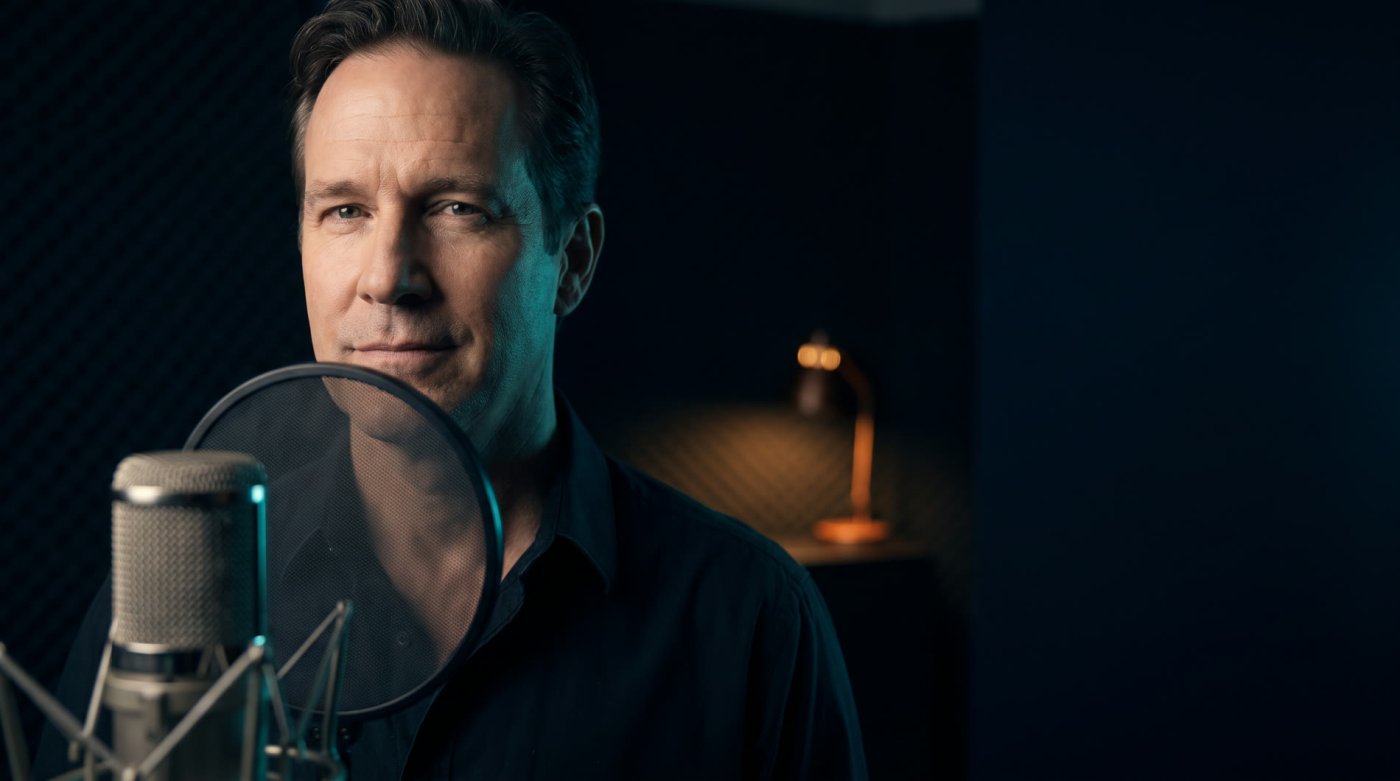
Voice over is a voice you hear but don't see. The narrator of a documentary, the person telling you your call is important, the cheerful one on the radio ad, the villain in the video game. If a voice is doing the talking and nobody on screen is moving their lips to it, that's voice over.
The term comes from film and broadcasting, where a recorded voice was laid "over" the pictures. It's also called off-camera or off-stage commentary. These days it covers a lot more than film. Commercials, animation, games, corporate videos, training courses, audiobooks, phone systems, podcasts, apps, museum audio guides, the voice in your car. If words get recorded on purpose for other people to hear, someone was hired to say them.
A very short history
Radio got there first. From the earliest broadcasts, announcers read the news, the adverts and the station calls live, and radio drama gave actors a way to play whole worlds with nothing but their voices. When television arrived, the same voices moved across to commercials, show intros and narration. Then film trailers, then cartoons, then the "talking books" of the 1930s, which we now call audiobooks.
A century in five steps
- Radio, 1920sLive announcers, live ads, radio drama. Voice acting is born.
- TelevisionCommercials, show intros and narration move across to the screen.
- Talking books, 1930sThe first audiobooks. Now the fastest growing corner of publishing.
- Animation and gamesCharacter work becomes a career of its own.
- The home studioA treated room and a good mic get you into the same castings as anyone.
The big change since then is where the work happens. For most of the last century you needed a studio in New York, Los Angeles, Chicago or London and someone to let you in. Now a treated room at home, a good microphone and an internet connection get you into the same castings as everyone else. Most voice over work is now cast and delivered online.
Where you hear it every day
Eight places you heard a voice actor today
- CommercialsRadio, TV and everything made for the internet, from a 6 second pre-roll to a two minute brand film.
- NarrationDocumentaries, corporate and explainer videos, product demos, museum guides, live sport.
- LearningE-learning modules, training courses, medical and technical narration, language lessons.
- Phone systemsGreetings, menus, on-hold messages. Small jobs, endless supply.
- AudiobooksA single narrator or a full cast, and the fastest growing part of publishing.
- Character workAnimation, video games, toys, dubbing, apps for children.
- LocalisationFilms, series and marketing videos re-voiced in another language so they travel.
- Podcasts and audio descriptionIntros and ads, and the described version of films and TV for blind and low vision audiences.
What a job actually looks like
From the outside, voice over looks like talking into a microphone. From the inside, the talking is the short bit in the middle of a process that's mostly reading, deciding and sending files. A typical booked job on a marketplace runs like this.
One job, start to finish
- The briefA client posts a script, a style ("warm, unhurried, not an announcer"), a length and a deadline. Sometimes a reference read they like.
- The auditionYou record a short sample of the actual script, in your own studio, usually within hours. Free, quick, and most of them go to someone else. That's normal.
- The bookingThe client picks a voice. On a rate-card site the fee is already known; nobody haggles.
- The sessionYou record the full script, clean it up, and deliver the file in the format they asked for. Sometimes the client listens in live and directs.
- PickupsA line they've rewritten, a name you pronounced wrong. A quick re-record of only the changed bits.
- Approval and paymentThe client signs off, the money is released. On the good sites it was held in escrow from the moment you were booked.
A few words you'll hear in the first week: copy is the script; a spot is one finished ad; a slate is saying your name before an audition take (increasingly not wanted); a pickup is a re-record of a few lines; usage is where and for how long the client can use the recording, which is what most of the fee is really for. There's a longer voice over glossary if you want the rest.
Is it a real career?
Yes, and a flexible one. There's no formal qualification to get. Training and coaching are strongly advisable, because a lovely voice with no technique is just a lovely voice, but there's no degree, no licence and no age limit. People start at 20 and at 60. Plenty do it part time around another job until the bookings say otherwise.
You can specialise in one kind of work or try your hand at all of them. And the old idea that you need the booming movie trailer voice is long gone. Most of what gets booked today is warm, real and conversational. An adult woman is regularly hired to play a ten year old boy. A soft Scottish accent gets more work than a "Voice of God".
There's always room for a new voice. What there isn't room for is a new voice with no training, no demo and no patience.
What you need are skills, some talent, a lot of dedication, a bit of creativity and the willingness to run a small business, because that's what a voice over career is. The rest of this track walks you through it. Start with getting started in voiceover.
End of read 1 of 20