
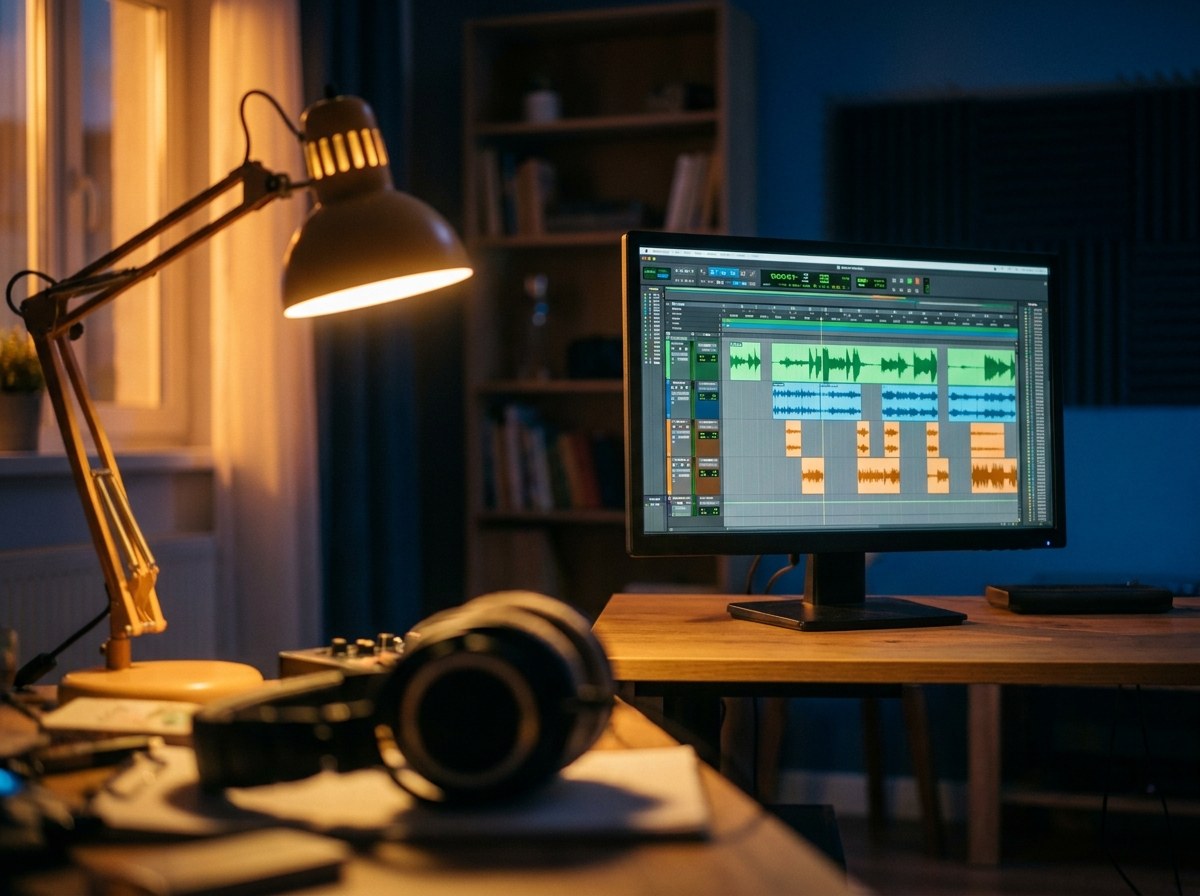
We've covered whether you're ready and how to plan the demo. Now the demo itself: what goes on it, in what order, and why.
Your demo is a marketing tool aimed at clients, agents, casting directors and producers, and it should show them what you can do for them. Not "look what I can do" but "look what I can do for you". It's not a random collection of your favourite reads. It's a demonstration of your best work and, just as important, of what you can do consistently on a Tuesday afternoon with a client on the line.
Demo by the numbers
Length: 60 to 90 seconds
The people who hire voices listen to a lot of demos, and most of them have made up their mind in the first ten seconds. Everything after that is confirmation. Keep every spot short, punchy and interesting, and keep the whole thing near a minute. Nobody has ever been booked because the demo was longer.
Spots: five to eight
Record more than you'll use. Ten to fifteen spots in the session gives you a range to choose from, and makes it obvious which reads are strongest, which are weak, and which two sound too alike to both stay. Vary the vocal style, pace and energy from spot to spot so the reel keeps moving.
Per spot: 8 to 15 seconds
Long enough for the character or the story to arrive, and no longer. Your best performances can run a touch longer than the rest. Every spot should be recorded at the same high quality, edited tightly and cross into the next without a bump.
Seventy seconds, spot by spot
What goes where
- No introduction. Older advice said to open with your name and a line about yourself. Don't. Your name is on the profile and the file. The first thing they hear should be you working.
- First spot: your strongest. The read your coach or producer rates highest, in the style you're most comfortable in, on the kind of copy you'd love to be booked for. If you've done real work for a well known brand, that goes here. If you haven't, your best practice read goes here, and nobody minds.
- Middle spots: range. The second, third and fourth spots show variety. Different attitudes, ages, energies and formats: a soft read, a bright retail read, a dry one, a warm narration line. Enough to give a listener ideas about how to use you, and not so many that you start to sound like someone you're not.
- Last spot: strong again. Start with a bang, end with one. If the first spot is your best, the last should be a close second. Leave them with something to remember.
- No sign-off. No "thanks for listening", no phone number. End on the last word of the last spot.
A running order that works
Here's the shape of a commercial demo that gets listened to all the way through. The categories are examples; the point is the contrast between neighbours.
- Warm and realA soft, conversational read. Insurance, a bank, a hospital. The one that says "I'm a person, not an announcer" in the first three seconds.
- Bright retailEnergy up, pace up. A sale, a launch, a summer of something. Shows you can lift without shouting.
- Dry and wryA little attitude. A beer, a car, a streaming service. Proves you can be funny without doing a voice.
- Trusted narratorTen seconds of documentary or corporate tone, slower, more air. The bridge to your narration work.
- Youthful or character-adjacentOnly if it's genuinely in your range. A snack, an app, a game. Otherwise skip it.
- Warm again, biggerClose with something that sounds like the first spot's older sibling. Same you, more of it.
Formats, briefly. Export an MP3 at 320 kbps for profiles and email, and keep a WAV master at 48 kHz, 24 bit. Level it so it sits with other demos: loud enough that nobody reaches for the volume, not so loud that it's crushed flat. If you don't know what those numbers mean yet, your producer does, and the academy's studio modules cover them in an afternoon.
Presentation and submission
Name the file properly: your name, the demo type, the year. Jane-Smith-Commercial-2026.mp3 gets found again. final_v3_NEW.mp3 does not. Export an MP3 at a decent bitrate for sending and for your profiles, and keep a WAV master somewhere safe.
When you upload to a casting site, label each demo by type so a client looking for a narrator doesn't have to sit through your character reel. When you email one, attach a link, not a 40 MB file, and put the type and length in the message: "Commercial demo, 62 seconds." Small courtesies get demos listened to.
Some do's and don'ts
DoWhat gets you listened to
- Get it produced by someone who makes demos for a living. Music and editing are half the sound
- Separate demos for separate markets
- Refresh it every couple of years, or when your voice moves on
- Name the file with your name, the type and the year
Don'tWhat gets you skipped
- Reads you couldn't repeat under direction
- Real ads you never recorded. The agency that made them will notice
- Padding. Five great spots beat eight good ones
- The best read buried at the end
There's no perfect recipe, and even a superb demo won't win every job. The aim is simpler: when they stop listening, they want to hear more.
Next: the different demo types, and which two to record first.
End of read 7 of 20