Blog
The lights drop, the room goes quiet, and a voice from nowhere says, “Ladies and gentlemen, please welcome your host.” Nobody turns around to look for the speaker. That’s the whole point. The Voice of God announcer is the one person at an awards night who’s heard by everyone and seen by no one.
This guide is for voice actors who’ve wondered whether live event announcing could be part of their work. It covers what the job is, where you sit on the night, how the script and the cues really work, how the pros get every name right, what to do when something goes wrong, and how to start getting booked.
A voice from nowhere, with a job to do
Jon Briggs, the British voice actor best known as the voice of Siri, announces dozens of award ceremonies a year and describes the role plainly on his own site. “Voice of God” is the events industry’s name for a live announcer, and he adds: “By tradition it is an unseen deep male voice that may appear to be coming from on high.” Tradition has moved on. You’ll hear women’s voices, younger voices and regional accents doing this job all over the world now.
What hasn’t changed is the work itself. You open the show, introduce the host and every presenter, read the nominees, announce the winners, fill the gap while someone walks the long way to the stage, and tell a thousand people where the bar is. You’re the glue between the moments people came for.
It turns up in more places than award shows. Conferences use a Voice of God to bring keynote speakers on. Sports venues use one between plays. Charity galas, product launches, graduation ceremonies and fashion shows all need someone to say the words that move the room from one moment to the next.
Briggs is clear about who suits it: “It requires an experienced voice over who is very used to the pressurized arena of live events.” There’s no second take. Whatever comes out of your mouth is what the room hears.
© The Voice Realm
Where you’ll sit on the night, and who’s in charge
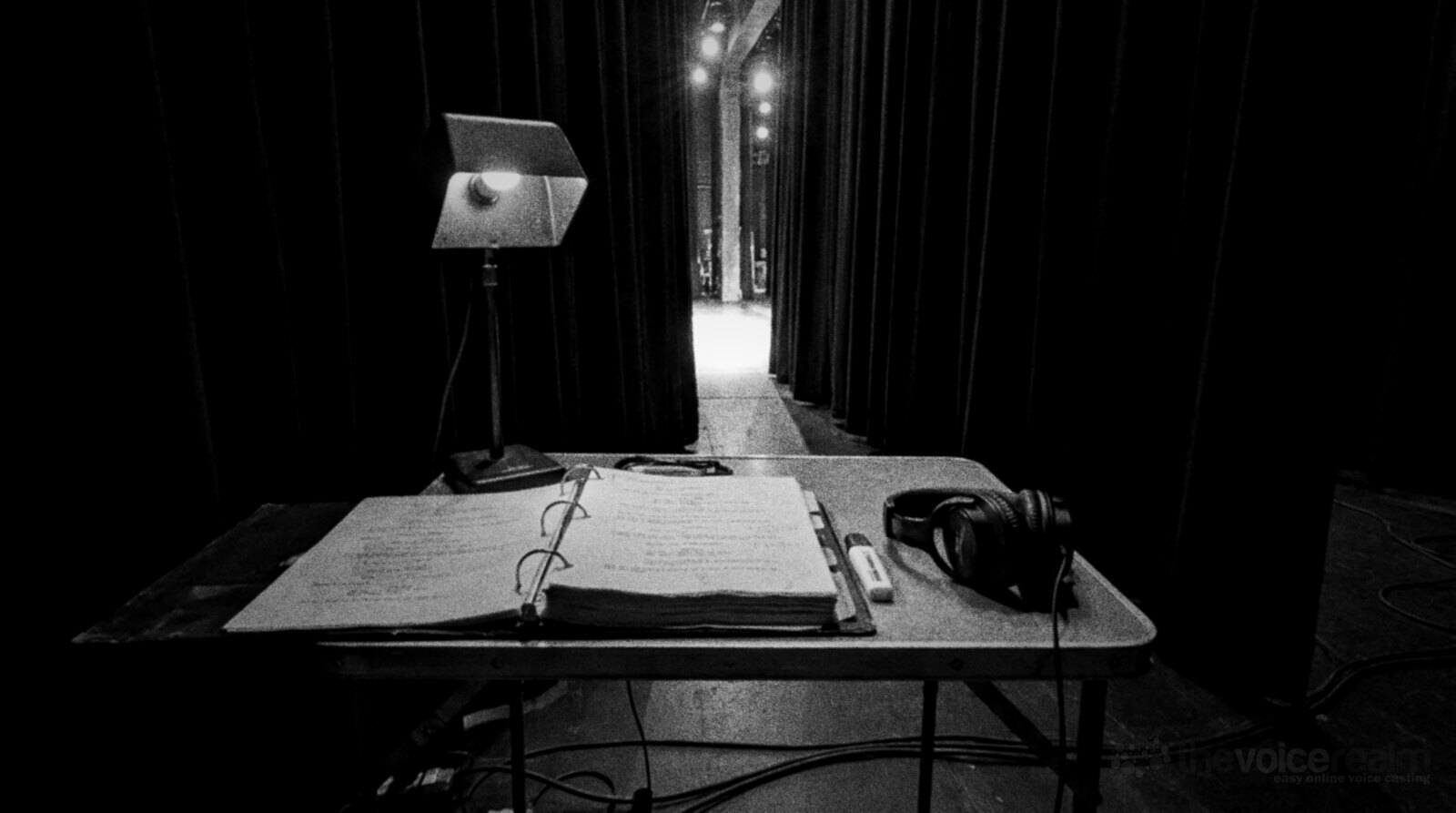
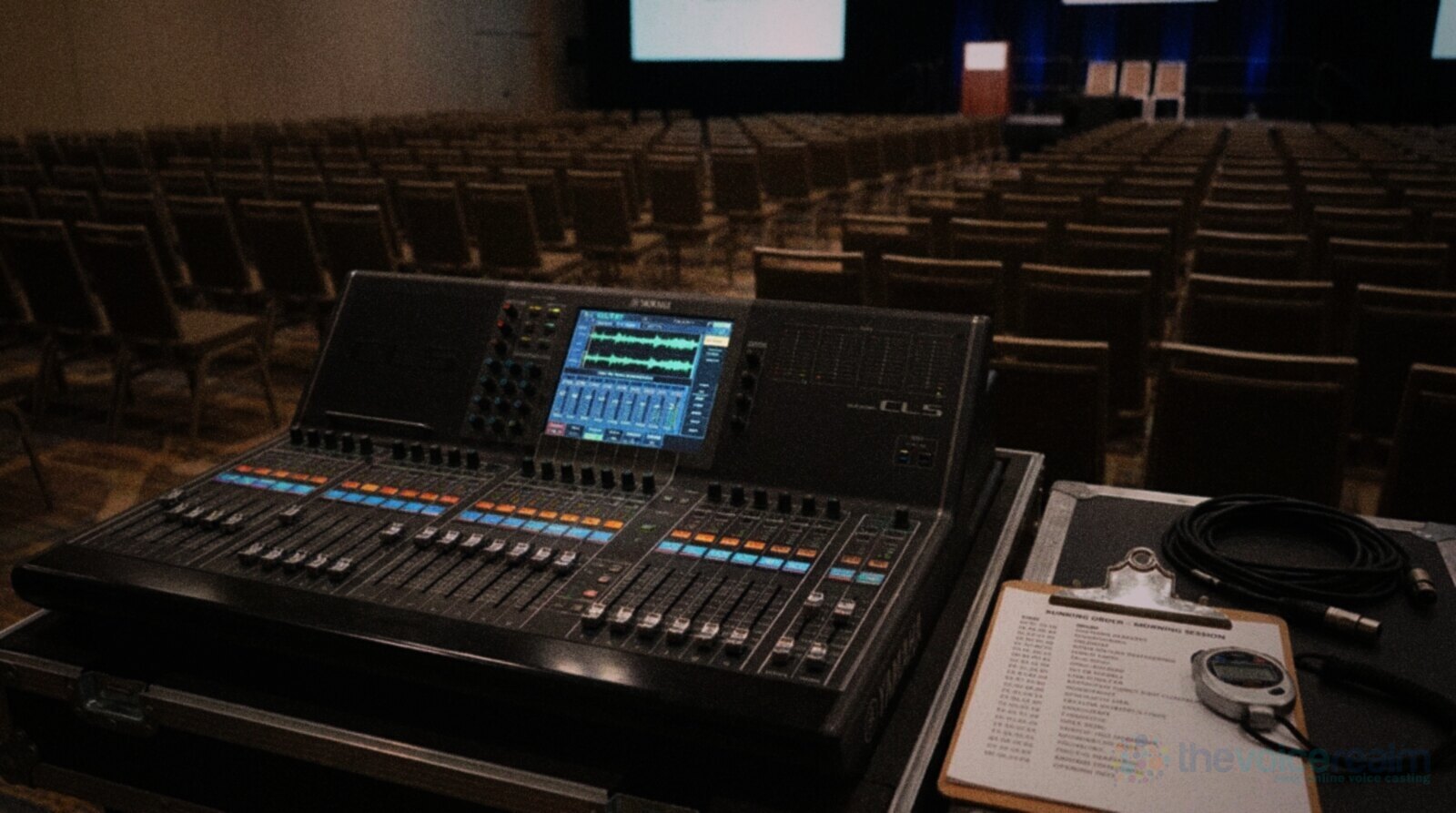
Forget the booth with the soft foam and the comfortable chair. On a big show you might be in a production truck behind the venue, a curtained corner of the wings, a riser at the back of the room or a small desk next to the sound engineer. Wherever it is, you’ll have a script, a microphone, a pair of headphones and a way to hear the people running the show.
That last part matters most. The person who calls the show (in theatre it’s the stage manager, at a conference it’s often called the show caller) talks to every department through a headset. Lighting, sound, video and you all take cues from the same voice. You’ll hear “standby VOG,” then “VOG go,” and you speak on “go,” not a breath before.
This is the first big change from studio work. In a session, you set the pace. On a live show, someone else does, and your timing has to slot into theirs. A walk-up sting, a lighting change and your line might all be cued at the same moment. If you jump early, the music lands on top of you. If you’re late, the presenter is standing at the lectern in silence.
Expect long days. Randy Thomas, the Oscars’ live announcer for many years, told Entertainment Weekly she’s working “the entire time that I’m at the theater, from rehearsals till the end of the show.” You’re part of the crew, not a guest who pops in for the live hour.
© The Voice Realm
The script keeps changing until the doors open
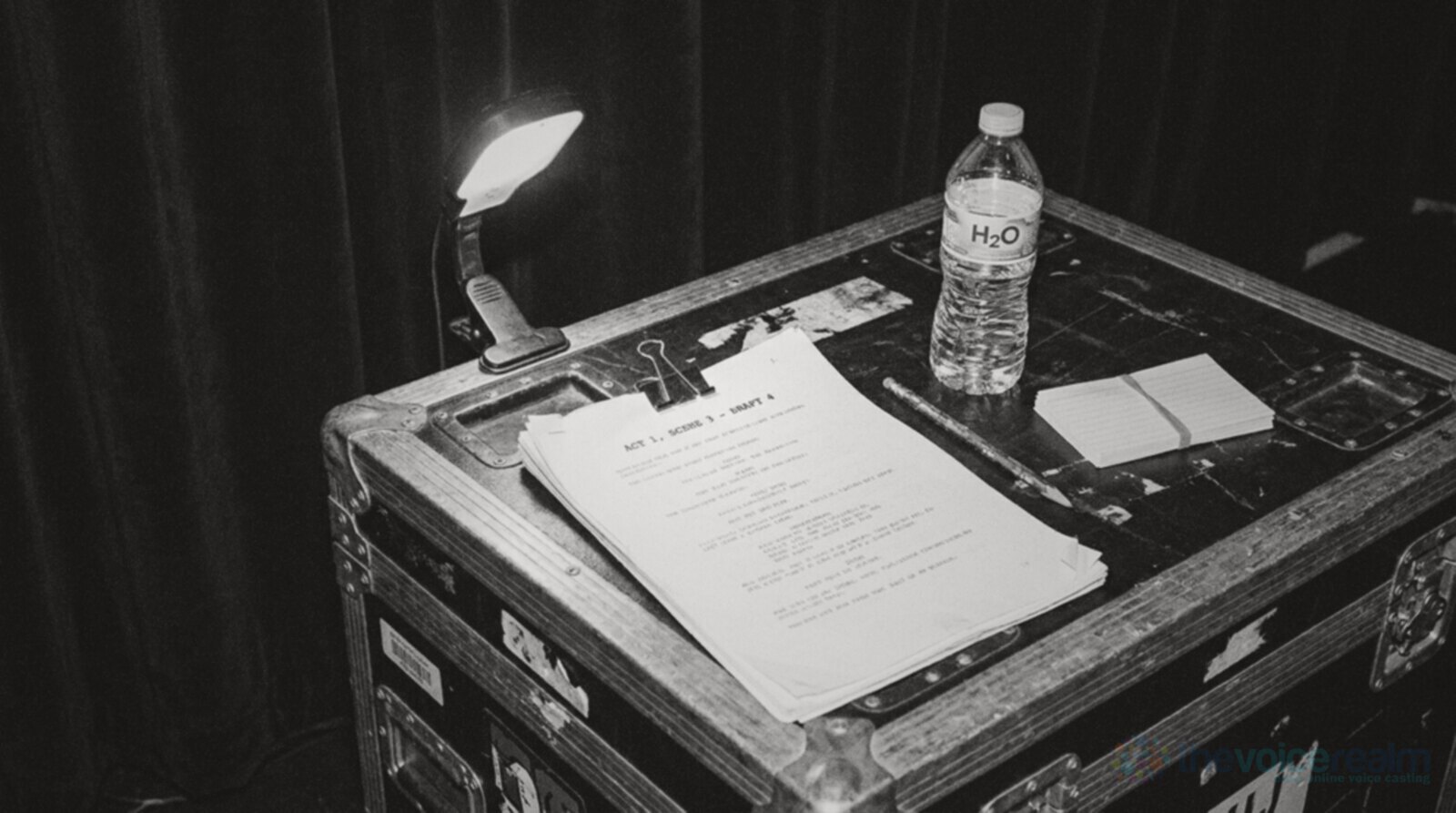
The script you’re sent a week out is a draft. Presenters drop out, the order changes, a sponsor wants their name read differently, the host decides to do a bit that needs a new intro. You’ll get revised pages at rehearsal, again at the dress run, and sometimes during the show itself.
Randy Thomas is firm about her side of that bargain: “I read the words that are given to me. I don’t try to rewrite anything.” It sounds simple, but it’s a discipline. The writers and producers have reasons for every word, including legal ones and sponsor ones. If a line doesn’t work in your mouth, raise it in rehearsal, not live.
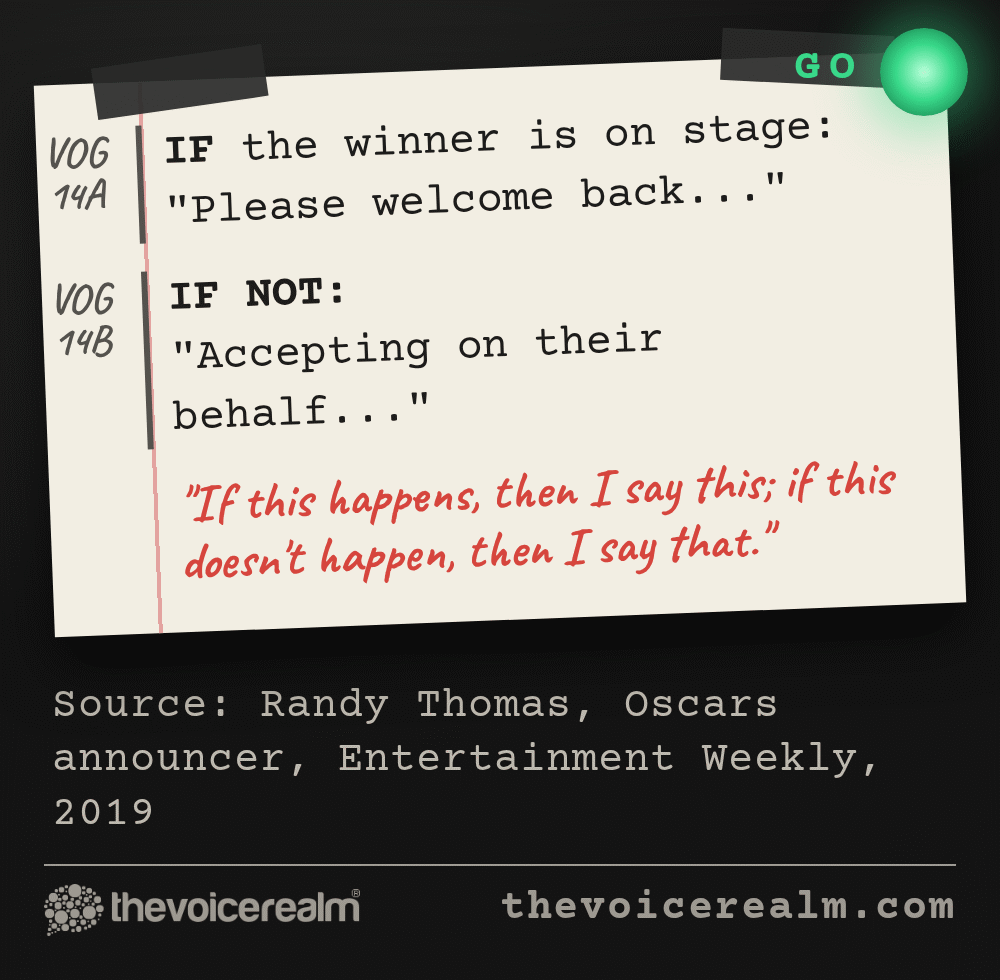
What the pros do instead is prepare for the things nobody can predict. A big show writes alternate announcements for the moments that could go two ways: a winner who isn’t in the room, a presenter who runs over, a technical problem with a video package. You’ll have both versions marked in your script, and the show caller tells you which one to read.
A few habits help here:
- Print the script big, one announcement per page or with plenty of white space, so you can find your place fast in low light.
- Number every announcement to match the show caller’s cue numbers, and write the alternates as A and B under the same number.
- Use a pencil. Changes are coming, and you’ll want to rub out last night’s notes.
- Keep the newest pages on top and put old ones away completely, so you never read a line that was cut.
© The Voice Realm
Every name, said right the first time
Getting a name wrong in a booth means another take. Getting it wrong at an awards dinner means the winner’s mother hears it, the winner hears it, and so does everyone they work with. On a live show, names are the part of the script that deserves the most work.
Randy Thomas doesn’t do it alone. On the Oscars she works with the Academy historian, Lucia Schultz, and describes her this way: “She speaks a few languages but can pronounce names in any language, and she sits with me.” You won’t have an Academy historian on a regional business awards night, but you can copy the idea. Somebody always knows how a name is said. Your job is to find that person before the show.
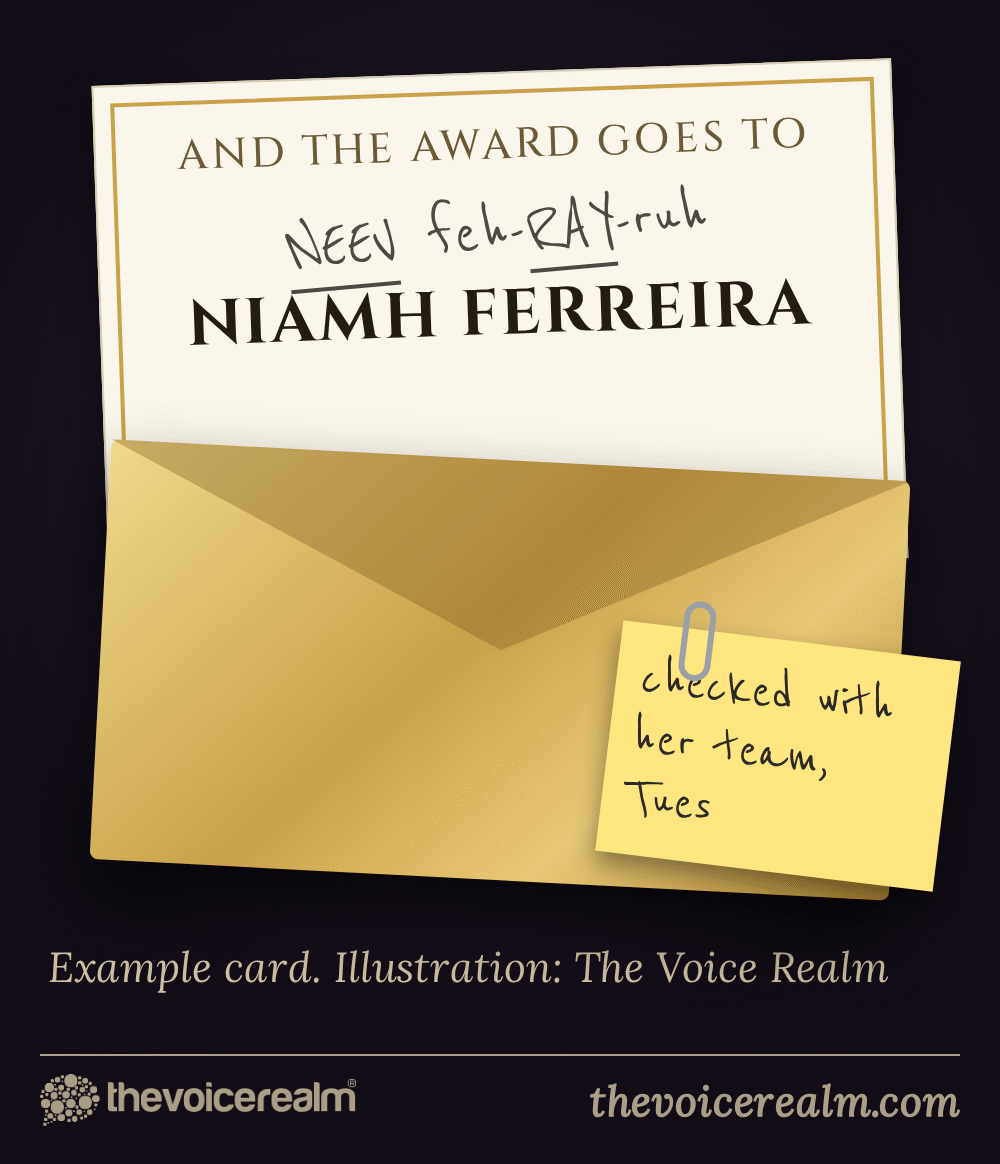
Ask the organiser for a pronunciation list as soon as you’re booked. Where they don’t have one, ask them to check with the nominees or their teams, and get answers in writing. When you can, find a recording of the person saying their own name: a conference talk, a podcast, a video on their company’s site. Our guide to researching how to say a word you’ve never heard walks through where to look.
 VOICEMASTERACADEMYLearn the craft in order.Module one is freeStart module oneTwenty modules, start to finish.
Then write it your way. Most announcers write a simple respelling above each tricky name, with the stressed syllable in capitals, rather than formal phonetic symbols. Say every name out loud at rehearsal, through the actual sound system, and ask the organiser to listen. Company names count too. A sponsor will notice if their brand is said the wrong way, and so will whoever booked you.
© The Voice Realm
Your voice in a big room
A ballroom isn’t a booth. The sound leaves the speakers, bounces off the walls and the ceiling, and comes back a fraction later. Speak at your studio pace and the words start to smear into each other. Most announcers slow down noticeably for a big room, leave a clean gap after names, and give the last consonant of each word a little more weight than they would on a commercial.
Energy works differently too. You’re not shouting, because the sound system does the lifting, but you are projecting a sense of occasion. Think of it as speaking to the back row rather than the person next to you. Keep it warm and grown up. The audience wants to feel looked after, not sold to.
Use your rehearsal to hear yourself in the room. Ask the sound engineer to play your mic through the main speakers while you read a few announcements, and walk to the back of the room for a moment if you can. You’ll learn more in two minutes of that than in an hour of guessing.
And look after the instrument. A long show day means talking to crew, rehearsing, and announcing for hours with dry stage air and bright lights. Bring water, warm up before rehearsal, rest your voice during breaks, and skip the shouting over loud music at the after-party.
When something goes wrong, keep the show moving
Something always goes wrong. A video doesn’t play, a presenter freezes, the wrong music fires, you trip on a word. The audience doesn’t know what was supposed to happen, so what matters is that you sound calm and the show keeps going.
Queen Noveen, a voice actor who has announced at the SAG Awards, the MTV Movie and TV Awards and the NFL Honors, put it bluntly to the Los Angeles Times: “No room for mess-ups, and if you do, the show must go on.”
“Keep it going and pick it up.”
Queen Noveen, live announcer, to the Los Angeles TimesPost this quote
In practice, that means a few things. If you stumble on a word, finish the sentence and correct only if the meaning was lost, especially with a name. If the show caller tells you to hold, hold, and don’t fill silence nobody asked you to fill. If you’re told to stretch, have a couple of short, safe lines ready, like a reminder of the evening’s sponsor or the next category. The worst thing you can do is sound rattled, because a nervous voice makes a whole room nervous.
If live performance makes your stomach drop, you’re in good company. Our piece on calming the shakes before you hit record has techniques that work just as well in the wings as at home.
© The Voice Realm
Live or pre-recorded: the two halves of the work
Plenty of Voice of God work never happens live. Conferences and online events often want the announcements recorded ahead of time so the technical team can fire them as audio files. That’s ordinary studio work: a list of short reads, recorded clean, cut into separate files and named exactly as the producer asks. It’s a good way to start, because it uses skills you already have.
Many announcers offer both. A pre-recorded package might cover the walk-in announcements, safety notices and the house rules, while the parts that depend on the night (winners, changes, anything with timing) are done live. Ask early which parts are which, because it changes what you prepare and what you charge.
If you’re recording a pre-recorded package, deliver a couple of alternates for the lines that could change, a generic version of any name you weren’t sure about, and short pickups the team can drop in. The producer will thank you on the night when something moves.
How to start getting booked
Briggs lists the one skill that matters most for this work: “brilliant sight-reading skills.” On a live show you will be handed a page you’ve never seen and asked to read it in ten seconds’ time. If that sounds frightening, practice it every day. Our guide to reading a script cold without sounding cold has drills that build exactly this muscle.
Then get some live hours. Offer to announce at a local charity dinner, a school graduation, a community theatre’s awards night or a club sports day. Volunteer gigs teach you the cue system, the room, and what it’s like to hear your own voice come back at you from forty speakers. They’re also where event organisers meet you.
Build a short live-events demo. Keep it to about a minute: an opening welcome, a presenter introduction, a nominees read with some tricky names, a winner announcement and a house notice. Read it as if the room is real. Event producers want to hear that you sound like an occasion, not a commercial.
Finally, tell people you do it. Put “live and pre-recorded event announcing” on your website and profiles, mention it to production companies and venues you already work with, and keep a short list of past events. Organisers book the person they heard last year more often than they go looking for someone new, so every good night is your best marketing for the next one.
Sources: Jon Briggs, “Voice of God”; Maureen Lee Lenker, Entertainment Weekly, “The Oscars’ ‘voice of God,’ Randy Thomas, answers our burning questions”, 2019; Kailyn Brown, Los Angeles Times, “No, her voice isn’t automated and she’s not a Siri. Queen Noveen is the ‘voice of God'”, 29 September 2023.
Ready to get booked?
See the jobs open right nowAbout Sarah Robbins
Sarah Robbins writes for The Voice Realm about finding voice over work, home studios, casting and the business side of voice acting.