Blog

This one’s for voice actors whose voice has just let them down. Maybe you shouted at a football match, pushed through a long audiobook day with a cold, or woke up after a big efforts session sounding like a gravel driveway. Someone tells you to “rest your voice”, and you nod. But what does that actually mean? Total silence? Just talking less? For how long? And what do you tell the client who’s expecting files on Thursday?
Voice rest is one of the most common bits of advice a voice actor will ever get, and one of the most loosely used. Here’s what voice clinics really mean by it, why whispering doesn’t count, how long is sensible, and how to run a rest day without losing work or your mind.
What voice rest actually means
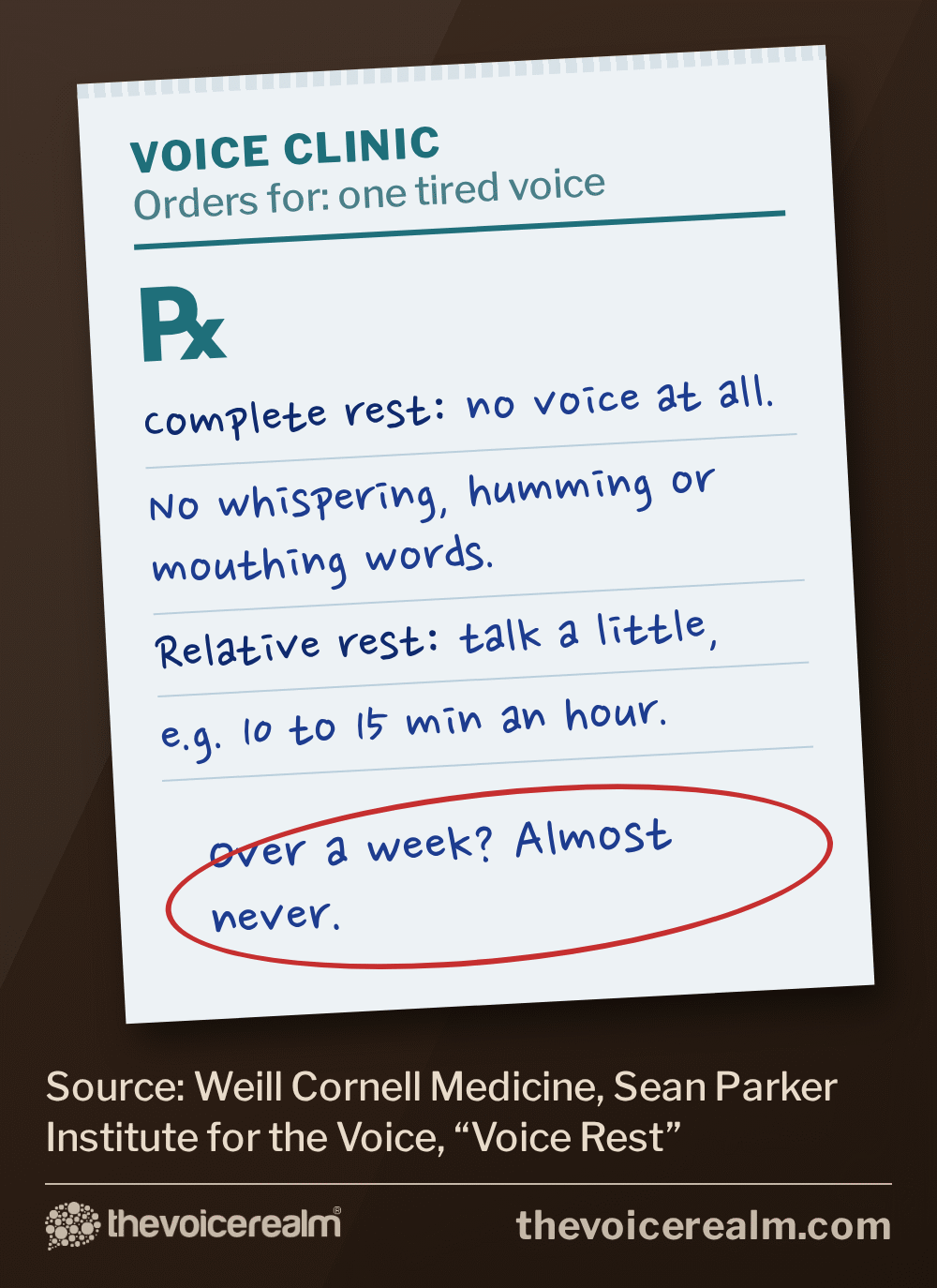
There are two kinds, and they’re very different. Rachel Coleman, a speech language pathologist at Weill Cornell Medicine’s Sean Parker Institute for the Voice, explains it plainly in the institute’s patient guide: “Complete voice rest is exactly what it sounds like: no voice production whatsoever. This includes speaking, yelling, singing, humming, coughing, whispering or mouthing words.”
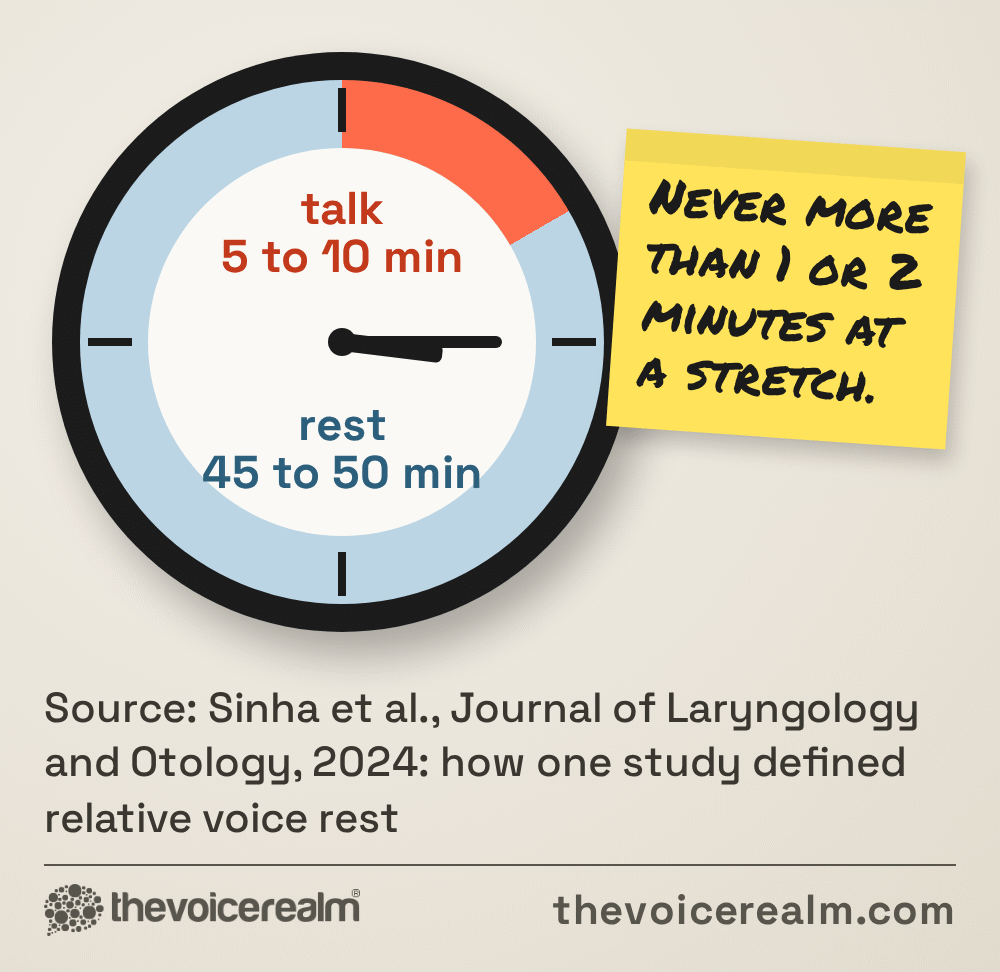
The other kind is partial, or relative, rest. In the same guide, Coleman writes that it “refers to limiting a patient’s vocal demands, both in terms of intensity (how loud or effortful their voice is) and how frequently they use their voice.” She gives an example of what that might look like: using the voice for no more than 10 to 15 minutes an hour.
That difference matters for anyone who records for a living. Complete rest means no sessions, no phone calls, no singing in the car and no quick “I’m fine” to your partner. Relative rest means you’re still allowed to talk, just less, more quietly and in short bursts. Most of the time, when a doctor or speech therapist says “rest your voice”, they mean the second one, but if you’re not sure, ask which they mean before you leave the appointment.
© The Voice Realm
Why whispering doesn’t count as rest
Almost everyone on voice rest starts whispering. It feels gentle. It isn’t, at least not the way most of us do it.
The ENT team at UT Southwestern Medical Center put it this way in their voice care Q&A: “Whispering is OK in principle, but most people do not whisper in a way that is good for the voice. When most people whisper, they want to be heard, so they strain to produce sound.” And then the line every voice actor should remember: “It can be as bad for your voice as shouting.”
Their advice is simple: “If you are trying to rest your voice, we recommend you not talk, not even in a whisper.” UT Health San Antonio’s voice center gives the same instruction after surgery, listing “absolutely no talking, throat clearing, whispering, or coughing (if you can avoid it).”
So on a rest day, write it, text it, type it or point at it. If you want the longer story on why a whisper strains your folds, our piece on what whispering really does to your voice goes into it.
What rest can and can’t fix
Rest is a tool for a specific job. Weill Cornell’s guide says voice rest “is principally useful to reduce swelling and prevent further damage following an acute vocal injury.” It names the conditions it’s used for most: “vocal fold hemorrhage, laryngitis, and swelling from overuse,” and recovery after vocal fold surgery.
A fresh injury
Swelling after a big shout, a long day of efforts or a nasty bout of laryngitis. Rest gives the tissue a chance to settle before you ask anything more of it.
The habit that caused it
Pushing from the throat, recording too many hours, talking over noise all day. Stop resting and the same habits bring the same problem back.
That second card is the bit people skip. Coleman’s guide is direct about it: “Unless the behaviors and conditions that first caused the problem are addressed, symptoms are likely to resume with normal use of the voice.” Rest buys you time. It doesn’t change how you use your voice when you come back.
If you keep losing your voice after long sessions, ask what keeps tiring it out, not only how long to rest. Our guide to how many hours a day you can safely record is a good place to start answering that.
© The Voice Realm
How long should you rest?
Shorter than you’d think. “Voice rest is typically a short term recommendation, although the duration varies depending on the condition being treated,” Weill Cornell’s guide says. It adds a warning worth taking seriously: “prolonged voice rest (more than a week) is almost never recommended, as it usually only serves to mask the problem and delay effective treatment.”
After surgery, rest is more formal and more strict, and it’s set by your own surgeon. UT Health San Antonio says: “Typically, your physician will prescribe three to seven days of voice rest after surgery.” Some clinics go longer for particular operations. The University of Mississippi Medical Center’s voice and swallowing center, for example, gives some patients a schedule for “coming off of 2 weeks of complete voice rest”, building back from 20 minutes in the morning and 20 in the afternoon to three hours or more a day across the following week.
For the everyday case, a sore and husky voice after an overloaded day with nothing worse going on, think in days, not weeks. A day or two of quiet, then a careful return. And if you’re unsure, that’s a question for a doctor, not for a forum thread.
© The Voice Realm
Relative rest: a talk budget
The clock above shows one way to picture relative rest, and it comes from a real study. In 2024, a team at Kasturba Medical College in India compared patients told to rest completely after vocal fold surgery with patients given relative rest. They didn’t find what you might expect. “There was no significant benefit of absolute voice rest on post-operative outcomes as determined by acoustic variables,” the authors wrote in the Journal of Laryngology and Otology.
 VOICEMASTERACADEMYLearn the craft in order.Module one is freeStart module oneTwenty modules, start to finish.
They also noticed that strict silence is hard to stick to: “Poor adherence to lengthy and stringent voice-rest recommendations was observed.” Their conclusion was that relative rest “might increase compliance and produce better outcomes.” It was a small study of 40 patients after surgery, so it’s not a rule for a husky Tuesday, but it matches what Weill Cornell’s guide says about keeping rest short.
For a voice actor, the useful idea here is the budget. Instead of “be quiet”, you get a number of minutes in each hour, spent in short sips, at a normal, easy volume. That’s something you can actually plan a day around.
Nobody agrees on the exact numbers, though. The same paper admits “there is no internationally accepted definition of what is meant by ‘relative voice rest’.” If a doctor gives you a budget, theirs wins.
Running a rest day when you work from home
Staying quiet is the easy part. Keeping work moving is harder. Here’s how to keep work ticking over without using your voice.
- Tell clients early, in writing. A short, honest note beats a late file. “I’ve strained my voice and I’m resting it on medical advice. I’ll have your files to you by Friday instead of Thursday.” Most clients would rather wait a day than get a tired, scratchy read.
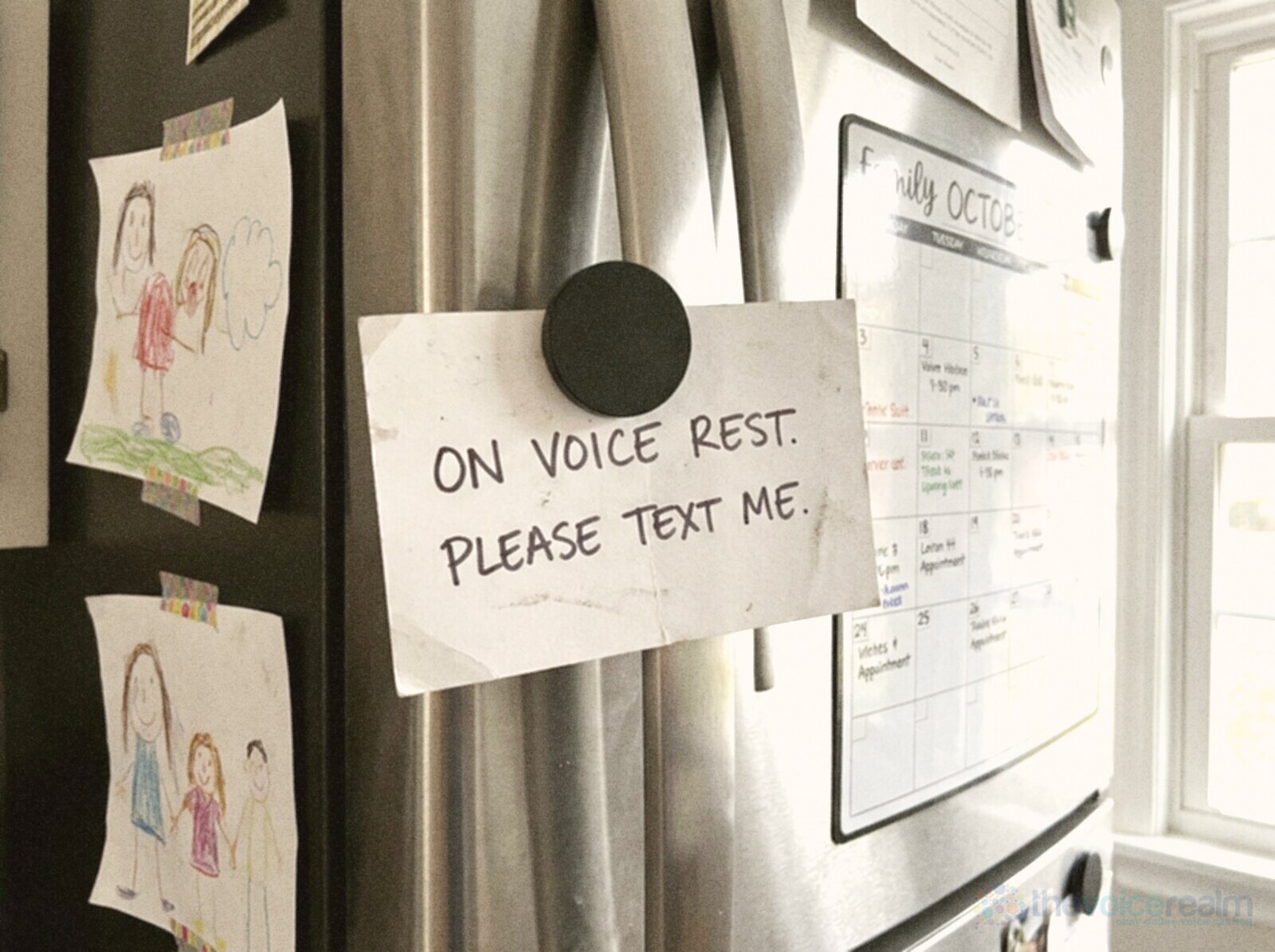
- Turn your calls into messages. Put a line in your email auto reply, switch your phone to text only and tell the people you live with. A note on the fridge does more than you’d think.
- Do the quiet work. Edit yesterday’s sessions, mark up next week’s scripts, update your website, send invoices. Rest days are perfect for the admin you’ve been putting off.
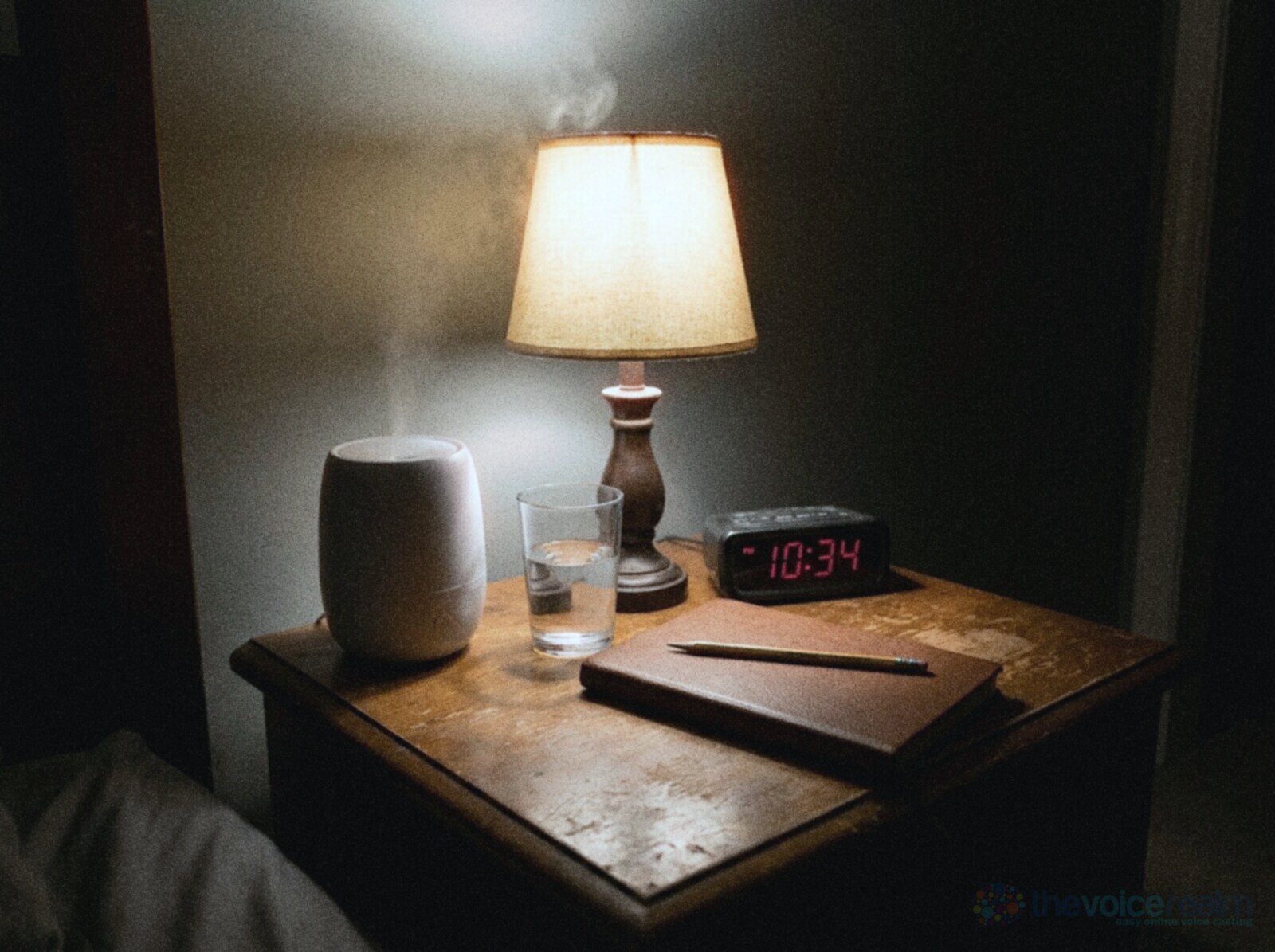
- Look after the tissue. Keep drinking water through the day, and if your bedroom air is dry, a humidifier at night helps. Our guide to staying hydrated as a voice actor explains why it matters so much.
- Don’t clear your throat. It’s a hard slam of the vocal folds. Swallow, sip water or do a silent, breathy huff instead.
© The Voice Realm
Coming back to the mic
The first day back is where people undo their own good work. You feel fine, there’s a backlog, and you book a four hour session. Don’t.
UT Health San Antonio’s guidance for patients coming back after surgery works well as a mindset for anyone: “You will be allowed to use your voice, but you must not overdo it.” It goes on: “you should never keep talking if your voice wears out or gets tired, or if there is any discomfort or serious change in quality or volume with talking.”
So build back in steps. Start with gentle hums and lip trills to see how the voice feels. Record short, easy reads first, at a conversational level, and save shouting, character work and long narration for later in the week. Take a proper break every hour. And if your voice starts to tire, stop, even if it’s mid script. A pickup tomorrow costs less than another week off.
It’s also worth checking your setup while you’re easing back in. If you’re pushing to be heard over a noisy room or a quiet mic, your voice will tire faster. A free run through Voice Edit Suite’s Home Studio Analysis will tell you whether your room is making you work harder than you need to.
© The Voice Realm
When rest isn’t enough
Rest isn’t a cure for everything, and a voice that doesn’t come back needs looking at. UT Southwestern’s advice is to “See a laryngologist (a type of Otolaryngologist (ENT) who specializes in the vocal cords and care of the voice) if you have been hoarse for two weeks or longer.”
Don’t wait that long if your voice went suddenly during a shout or a scream or if it hurts to talk. A sudden loss of voice after heavy use can be a sign of a bleed on the vocal fold, and that’s one of the conditions Weill Cornell names as needing proper rest under a doctor’s eye. If your voice keeps going husky after every long day, a voice clinic or a speech language pathologist can work out why. Our guide to vocal nodules and what causes them covers one of the most common reasons.
Your voice is the one piece of kit you can’t replace. A day or two of quiet, done properly, is a small price for keeping it working for years.
Sources: “Voice Rest”, Rachel Coleman, Weill Cornell Medicine, Sean Parker Institute for the Voice; “Voice care: Sorting fact from fiction”, UT Southwestern Medical Center; “Post-Surgery Care: Vocal Rest”, UT Health San Antonio; “Voice Rest Instructions”, University of Mississippi Medical Center; “Role of absolute versus relative voice rest in post-operative management of benign vocal fold lesions”, Sinha et al., Journal of Laryngology and Otology, 2024.
Ready to get booked?
See the jobs open right nowAbout Sarah Robbins
Sarah Robbins writes for The Voice Realm about finding voice over work, home studios, casting and the business side of voice acting.