Blog
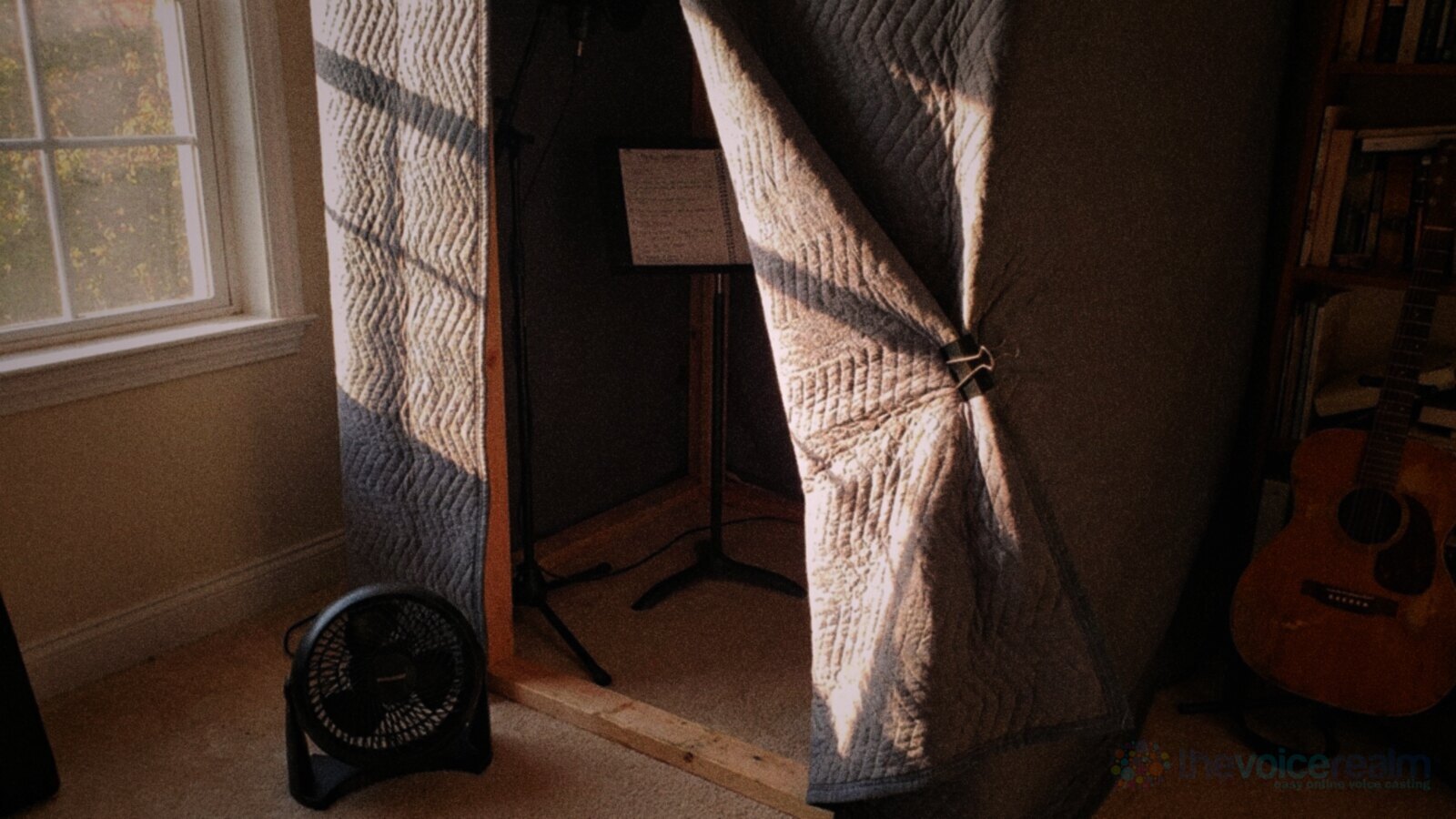
Twenty minutes into a session and you’re peeling off your sweater. Forty minutes in, your head feels like cotton wool and you’ve fluffed the same product name four times. If you record in a vocal booth, whether it’s a factory-built cabin, a blanket fort in the spare room or a lined wardrobe, this one’s for you. It explains why booths get hot and stuffy so quickly, what that stale air does to your reads, and how to bring fresh air in without letting noise in with it.
Why a small booth heats up so fast
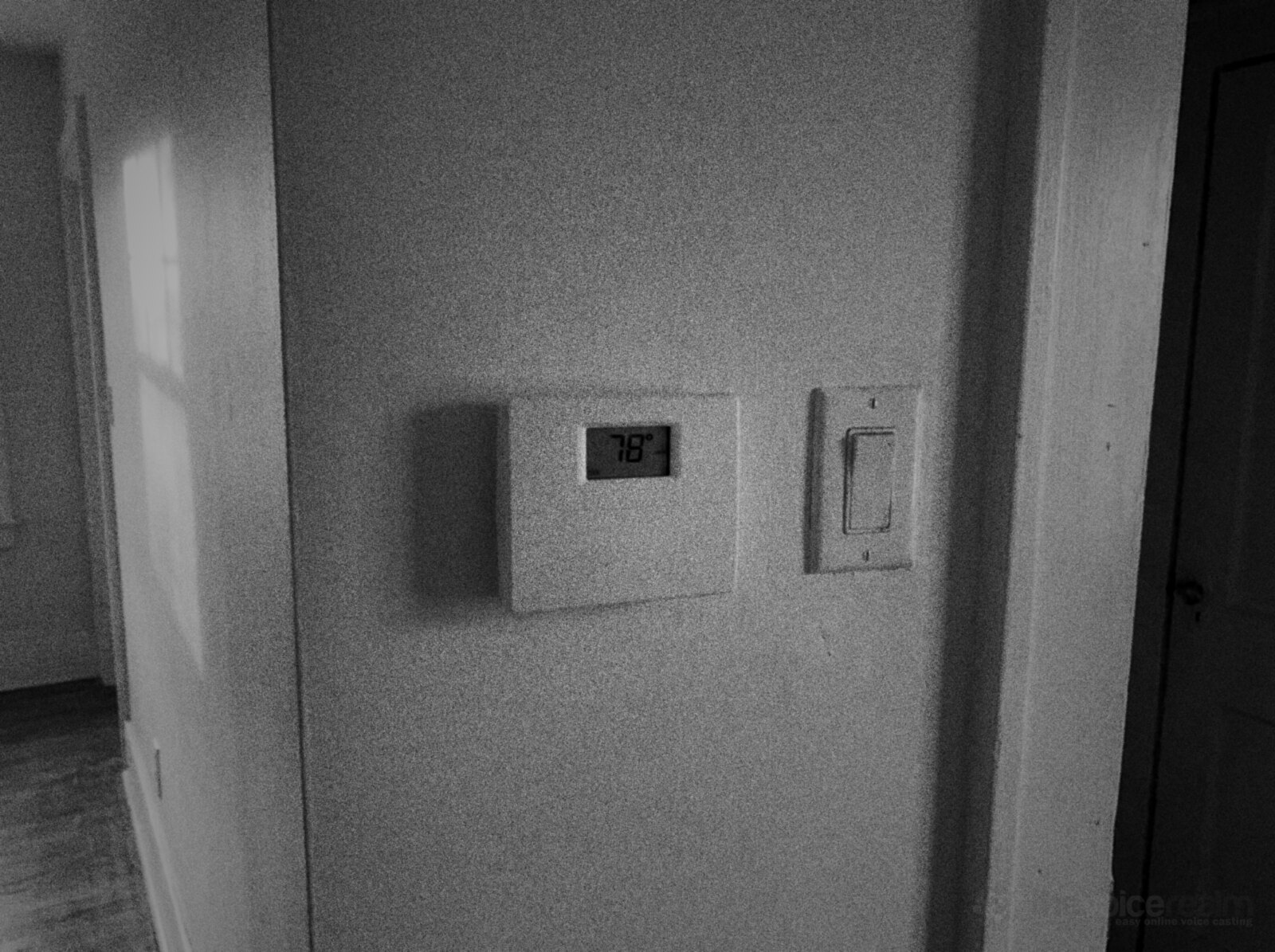
A booth is designed to stop sound getting in or out. The materials that do that best are heavy, dense and sealed, which also makes them very good at trapping air and heat. Every gap you plug to stop the traffic noise is a gap that used to let your room breathe.
Then there’s you. A resting human body gives off a steady amount of heat, and in a big room it spreads out and you never notice. In a booth with a floor the size of a bath mat, there’s nowhere for it to go. Add a laptop, an interface, a screen and a desk lamp, and you’ve got a small heater running in a small, sealed box.
The size makes it worse. The less air there is around you, the faster your own warmth and breath change it. Which is why a walk-in cupboard can feel fine for five minutes and unbearable after thirty.
© The Voice Realm
Stale air is the bigger problem
Heat is the bit you feel. The bit you don’t feel is the carbon dioxide you breathe out, which builds up in a small sealed space even faster than the heat does.
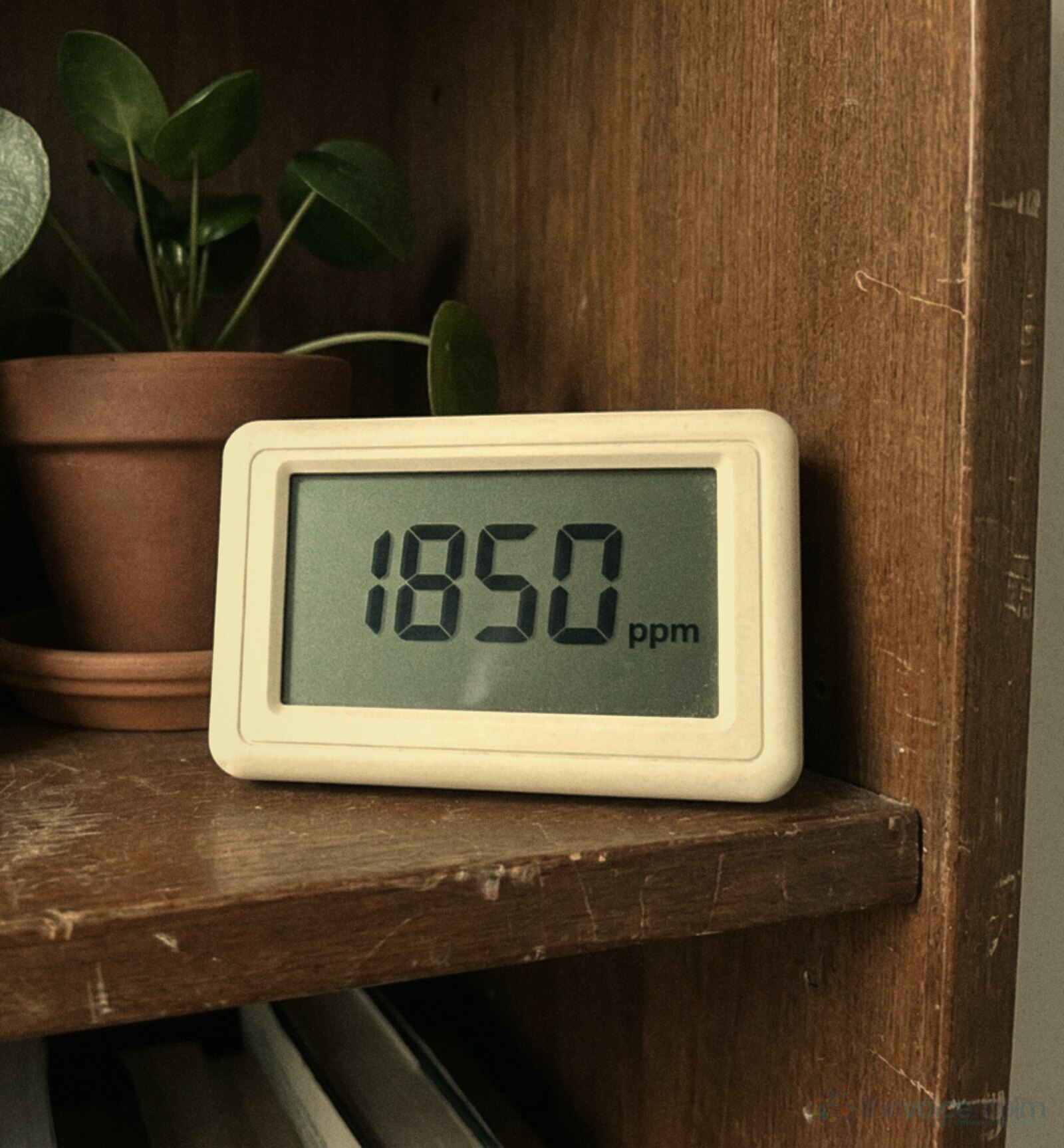
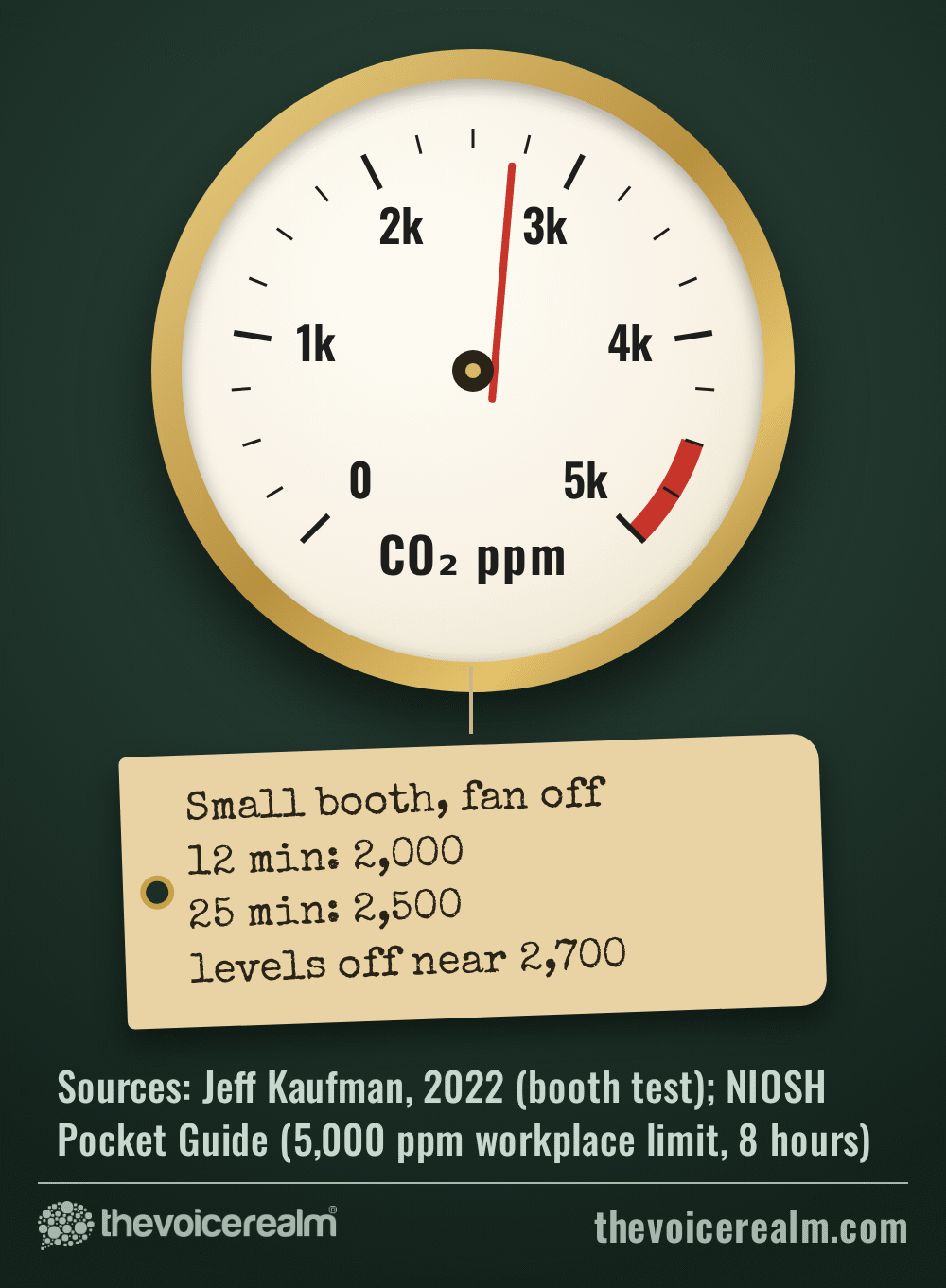
Jeff Kaufman, who writes a long-running personal blog, put a CO2 meter in the soundproof phone booth at the lab where he works, just to see what happened. The booth was small, around 1.5 cubic metres (54 cubic feet), which is about the size of plenty of home vocal booths. With its built-in fan running, the air stayed fresh. Then he tried it with the fan off. In his words: “With the ventilation disabled, however, it reaches 2k PPM CO2 in 12min, 2.5k in 25min, and plateaus at ~2.7k.”
That’s parts per million, and the fresh air outside your window is a small fraction of those numbers. The booth got there in about the time it takes to record a couple of e-learning modules.
Kaufman’s booth was sold with ventilation for exactly this reason, and somebody at his lab had unplugged it, thinking the gentle whoosh was a white noise machine. Plenty of voice actors do the same thing on purpose, because a fan’s whoosh is exactly what a microphone hears.
What stuffy air does to a session
Let’s be clear about what this isn’t. A booth at a couple of thousand parts per million isn’t dangerous. The workplace limit set by NIOSH, the US government’s occupational safety institute, is 5,000 ppm averaged over a working day, and a single person in a booth won’t get anywhere near the level it treats as an emergency.
But “safe” and “at your best” aren’t the same thing. Researchers at the Harvard T.H. Chan School of Public Health had office workers spend whole working days in a controlled office where the air was changed from day to day without the workers being told. On the days with plenty of fresh outdoor air coming in, scores on a test of higher thinking were far better than on the days set up to match a conventional office building. The team reported that “VOCs and CO2 were independently associated with cognitive scores.” In other words, carbon dioxide and chemical pollutants in the air each made a difference on their own.
Decision making, focus and quick responses are exactly what a live directed session asks of you. A director gives you a note, you have to hold it in your head, change the read and not lose the last fix. A foggy head shows up as more flubs, slower pickups and a read that goes flat as the session wears on. If you’ve ever found that your best takes all come in the first quarter of an hour, the air might be part of the reason, alongside the ordinary tiredness covered in our guide to how many hours a day you can record.
© The Voice Realm
Quick fixes that cost nothing
Before you buy anything, try these. Most voice actors find they solve the problem for short sessions on their own.
Open the door between takes. It’s the simplest fix there is, and it’s what Kaufman suggested for anyone recording in a booth like his: “The only case I’d see unplugging it was if you were using the booth for sound recording, in which case I’d probably make a habit of opening the door to let it air out between takes.” Even thirty seconds with the door wide open swaps a lot of air in a small space.
Cool the room first. Your booth can only be as cool as the room around it. Run the air conditioning or open the windows in the room before you start, then turn the air conditioner off when you record, since it’s usually the loudest thing in the house.
Get the heaters out. Put the laptop outside the booth and run a screen or tablet inside instead. Swap any old halogen or incandescent lamp for an LED one. Each of these also removes a source of fan noise or hum, which helps with hunting down background noise as well.
Take proper breaks. Step right out every twenty to thirty minutes, all the way out rather than to the doorway. Have some water, stretch, and let the booth air out while you’re gone.
Dress for it. Thin, quiet layers you can take off. Not a nylon jacket that rustles every time you turn a page.
© The Voice Realm
Bringing fresh air in quietly
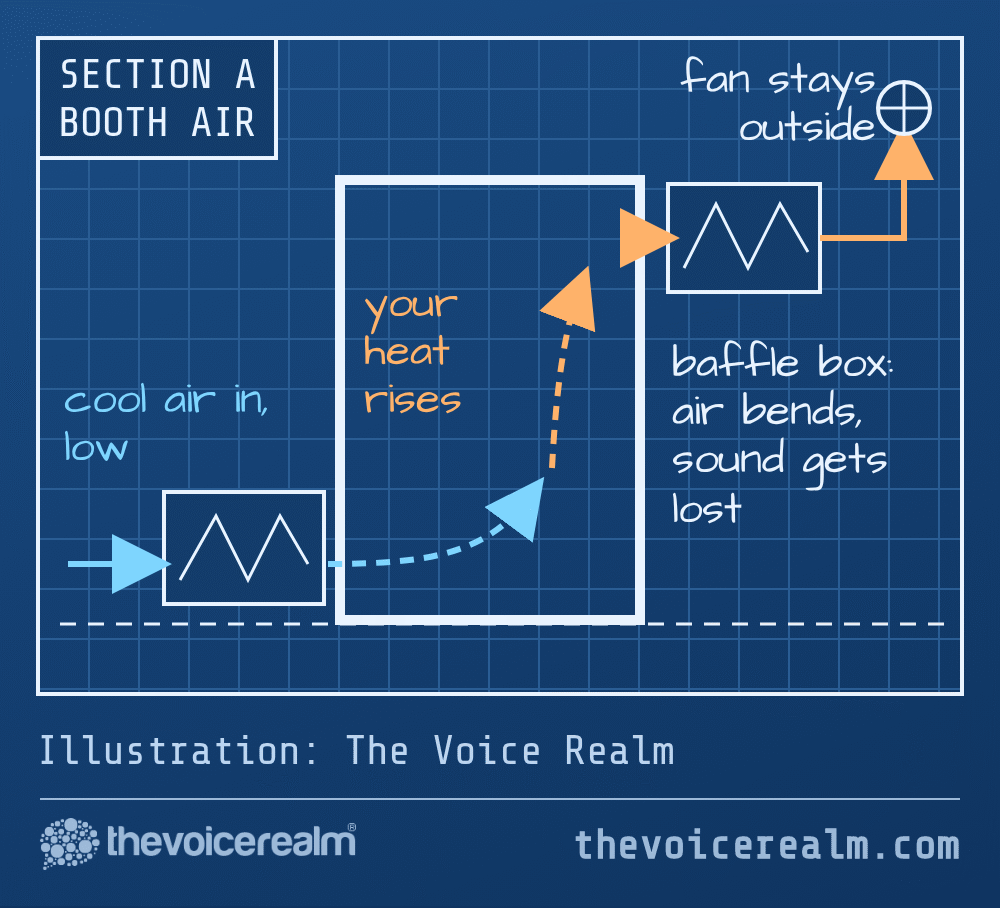
For long sessions or a booth you’ll use every day, you’ll want a proper path for air. The drawing above shows the basic layout, and it’s the same idea whether you’re adding to a factory booth or building your own.
 VOICEMASTERACADEMYTwenty modules, one at a time.Breath controlHome studioCommercial techniqueAuditionsStart module oneNo experience needed.
Warm air rises, so cool air goes in low and warm air comes out high, on opposite sides if you can manage it. That gives a gentle flow across the booth instead of a draught on your neck.
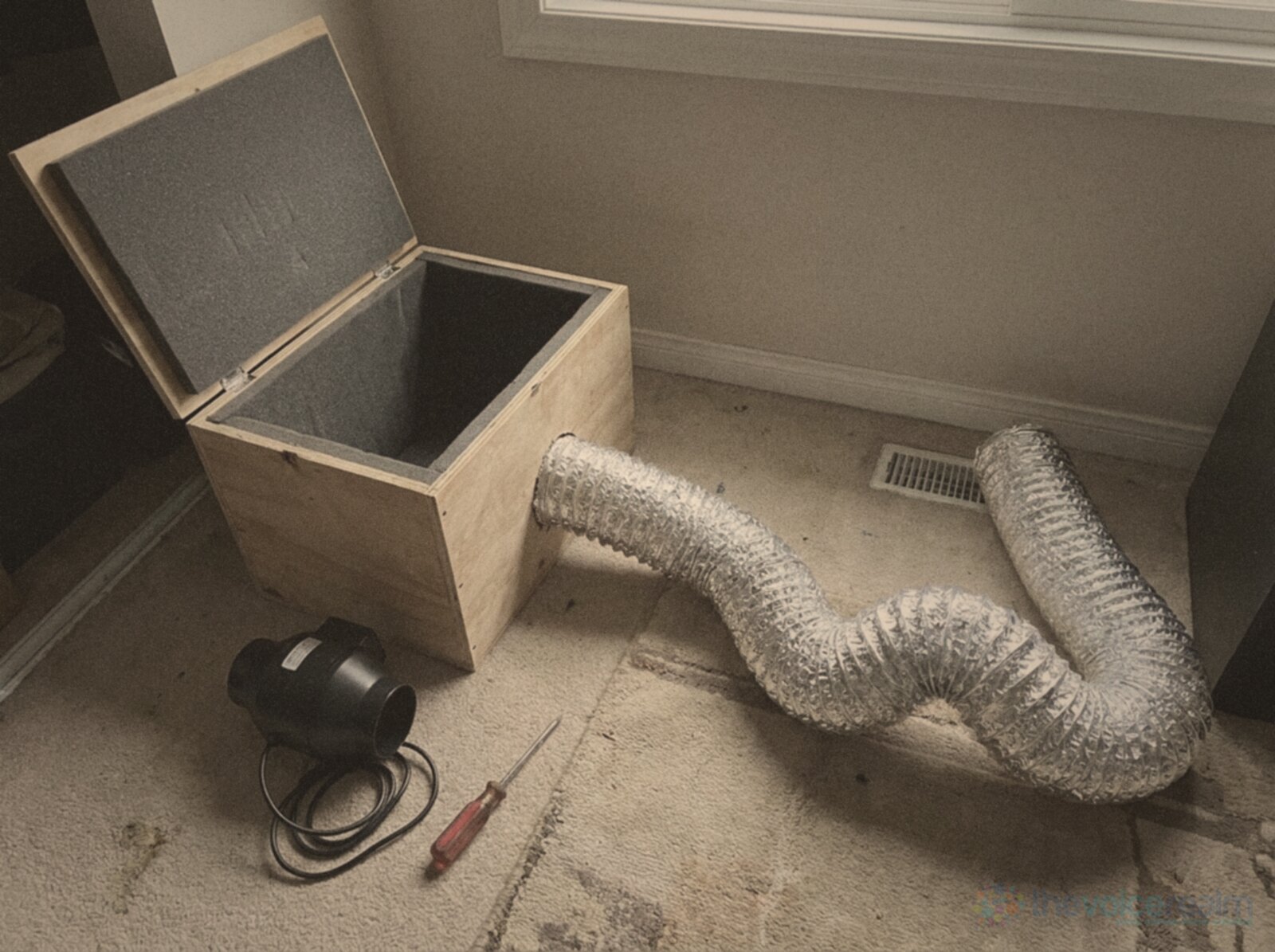
The noise problem is solved in two ways. First, the fan itself never goes inside the booth. It sits outside, at the far end of a length of duct, so its motor noise is a long way from the microphone. Second, the air travels through a baffle box on its way in and out. That’s a box lined with sound-absorbing material and divided by internal walls, so the air has to zigzag through it. Air bends around corners happily. Sound doesn’t, and loses a bit of energy at every turn.
A few other things help. A larger fan running slowly is quieter than a small fan running fast, and wide ducts carry the same air more quietly than narrow ones. Flexible duct lined with insulation is quieter than bare metal duct. And a speed control is worth every cent, because you can run the fan hard between takes and slow right down, or switch it off, while you record.
© The Voice Realm
Building a simple baffle box
You don’t need to be a carpenter. A baffle box is a sturdy wooden box with a hole at each end and a couple of internal panels that force the air to snake through it. Here’s the usual approach.
Start with a solid box. Plywood or MDF, glued and screwed so it doesn’t rattle. A lid you can open makes it easier to line and fix later.
Line every inside surface with acoustic foam or mineral wool, and glue it down well so nothing flaps.
Add two or three internal walls that alternate, one reaching from the top and the next from the bottom, so air takes an S-shaped path. Leave the gaps wide enough that the air isn’t squeezed, or the fan will have to work harder and get louder.
Connect the duct with a short collar on each end and seal round it with acoustic sealant or tape so sound doesn’t sneak past the outside of the duct.
“I’d probably make a habit of opening the door to let it air out between takes.”
Jeff Kaufman, after testing CO2 in a small sealed boothPost this quote
Then do the same again for the other end. Two boxes, one for the air coming in and one for the air going out, is the classic layout. If you only build one, put it on the exhaust side up high and let the door gap or a simple low vent bring fresh air in.
Last of all, mount the boxes so they don’t touch anything that rings. A box screwed straight onto a thin booth wall can pass vibration through. A strip of rubber or felt underneath helps.
© The Voice Realm
Measure before and after
The only way to know whether a fan is too loud is to measure it. Record a minute of silence in your booth with the fan off, then a minute with it on at the speed you plan to use. The free Home Studio Analysis from Voice Edit Suite will tell you what your noise floor is in each case, so you can see whether the fan has pushed it up, and by how much. Measure, adjust the fan or the baffling, and measure again.
For the air itself, a small home CO2 monitor is cheap and quick to read. Pop it in the booth for a normal session and watch the number climb. You’ll learn very quickly how long you can go before you need to open up, and whether your new ventilation is keeping up. If the numbers creep past a couple of thousand, that’s your cue to take a break or turn the fan up between takes.
Ventilation is one part of a good booth, not the whole of it. If your recordings still sound boxy once the air’s sorted, our guide on how to treat a room for voice over covers the reflections side of the problem. Get both right and you’ll have a booth you can work in all afternoon, still sounding as sharp at the end of a session as you did at the start.
Sources: Jeff Kaufman, “Framery Phone Booth CO2 Accumulation”, 2022. Allen JG, MacNaughton P, Satish U, Santanam S, Vallarino J, Spengler JD, “Associations of Cognitive Function Scores with Carbon Dioxide, Ventilation, and Volatile Organic Compound Exposures in Office Workers”, Environmental Health Perspectives, 2016. NIOSH, “Pocket Guide to Chemical Hazards: Carbon dioxide”.
Ready to get booked?
See the jobs open right nowAbout Sarah Robbins
Sarah Robbins writes for The Voice Realm about finding voice over work, home studios, casting and the business side of voice acting.