Blog

Every so often a story turns up in the radio trade press that has nothing to do with ratings, breakfast teams or who signed with whom, and it ends up saying more about the voice business than any of them. This week it came from Leederville, in Perth’s inner north.
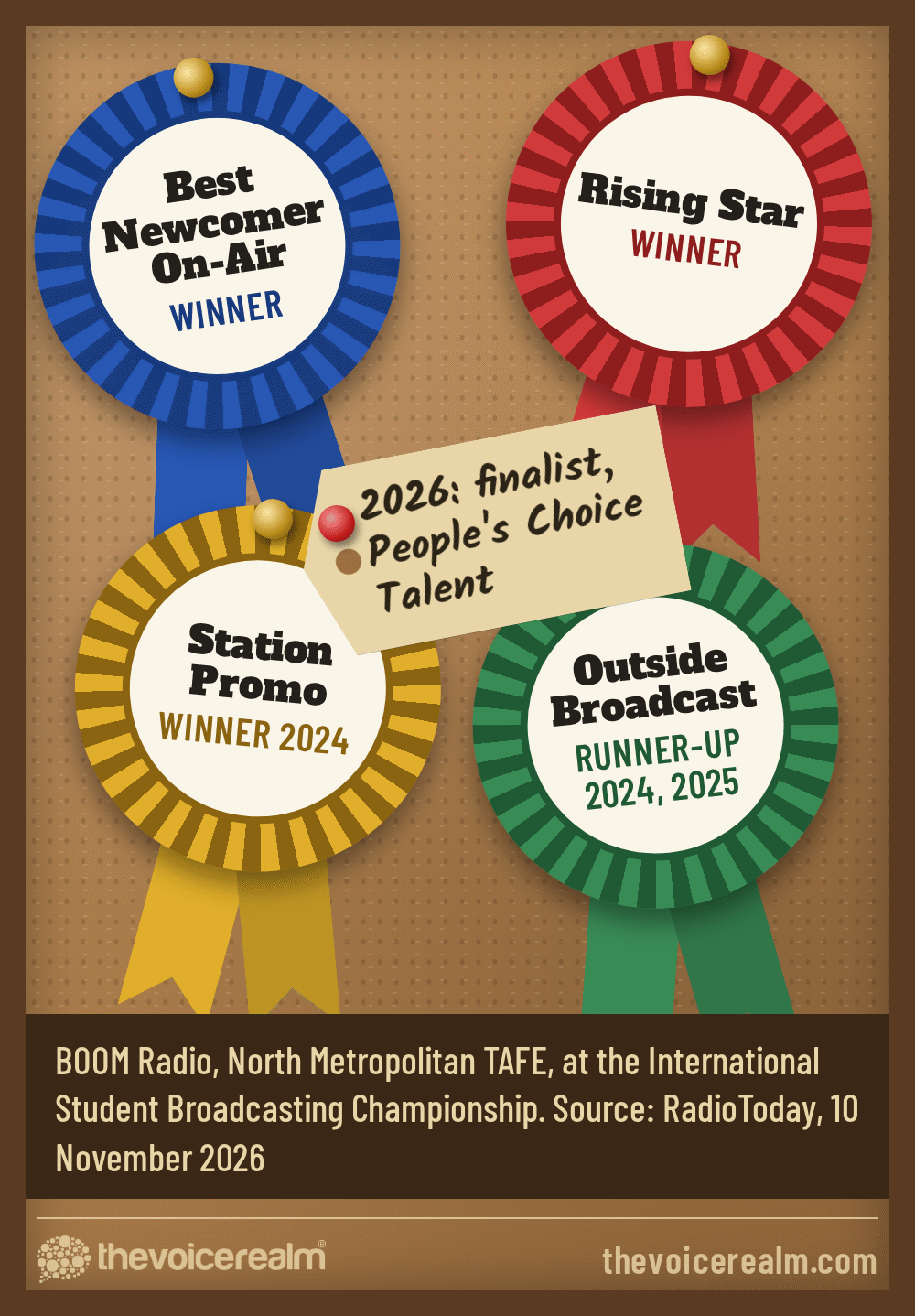
Emily Prior, a North Metropolitan TAFE student and Content Director of the student station BOOM Radio, has been named a finalist for the People’s Choice Talent award at the International Student Broadcasting Championship. RadioToday reports she’s the only Australian radio student in the category, up against students from university stations in the United States and the Philippines. The winner is decided by public vote, and voting closes on Friday 20 November.
Here’s our read on why a student award in Perth matters to anyone who earns a living from their voice in Australia, or wants to. It’s written for voice over artists at every stage, with a short note at the end for the people who book them.
What happened in Leederville
BOOM Radio is a not-for-profit, student-run station at North Metropolitan TAFE’s Leederville campus. It started in 2012 and streams online. Students run it like a real station, with a content director, a schedule of shows, promotions and outside broadcasts, and it has a habit of turning up on the championship’s results pages year after year.
Emily finished her Diploma in 2025 and is now studying the Advanced Diploma of Screen and Media (Broadcast Radio and Podcasting) while running the station’s content. Her nomination is for her work on air, and what she told RadioToday is the part that stayed with us.
“Being nominated is huge. When I started with BOOM, I had no idea how impactful it would be to share my story and help give a voice to those living with a disability,” she said.
Her lecturer, Bryant van Dijken, was just as plain about it: “Watching Emily find her voice and grow in confidence has been one of the most rewarding parts of being her lecturer.”
© The Voice Realm
Where Australian voices learn to hit the clock
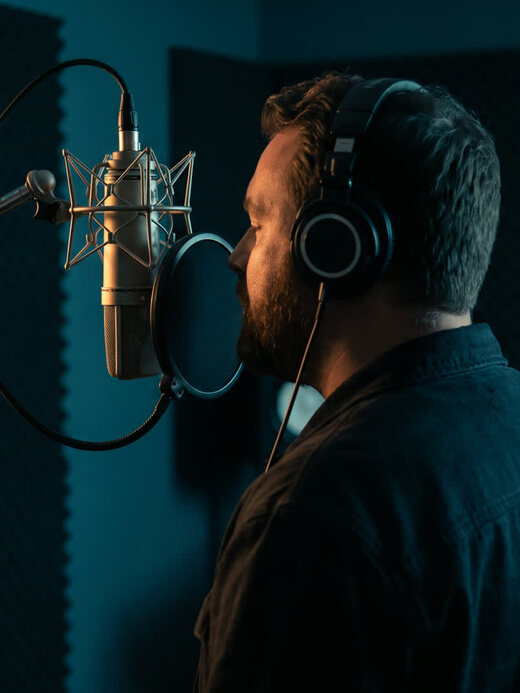
Ask a room of working Australian voice over artists where they first heard their own voice come back through a pair of headphones and a surprising number will name a community or student station. Not a course, not a coach: a desk, a microphone and a show that went to air whether they felt ready or not.
That matters because a station teaches exactly the skills clients pay for, and the ones you can’t fake in an audition. You learn to finish on time. You learn to read copy you’ve never seen and make it sound like you wrote it. You learn that the microphone hears the smile and the slump. And you learn to fix your own stumbles without stopping, because live radio doesn’t stop for anyone.
We made a similar case last week in our piece on fifty years of volunteer voices at Triple R. A TAFE station adds something a volunteer station can’t: a lecturer, a timetable and a qualification at the end. RadioToday notes a new Certificate IV in Screen and Media (Broadcast and Digital Media) launches at North Metropolitan TAFE in 2027, so the path into Perth audio is getting wider, not narrower.
Even the promos students cut for their own station are good training. A station promo has to land in thirty seconds with music underneath, which is the same discipline behind the voices you hear in radio and TV ads, still the backbone of commercial voice work in this country.
© The Voice Realm
Giving a voice to people who rarely hear their own
The phrase in Emily’s quote that a voice over artist should sit with is “help give a voice to those living with a disability”. It’s a reminder that the voice business has always been about who gets heard, and for a long time the answer was a fairly narrow slice of the country.
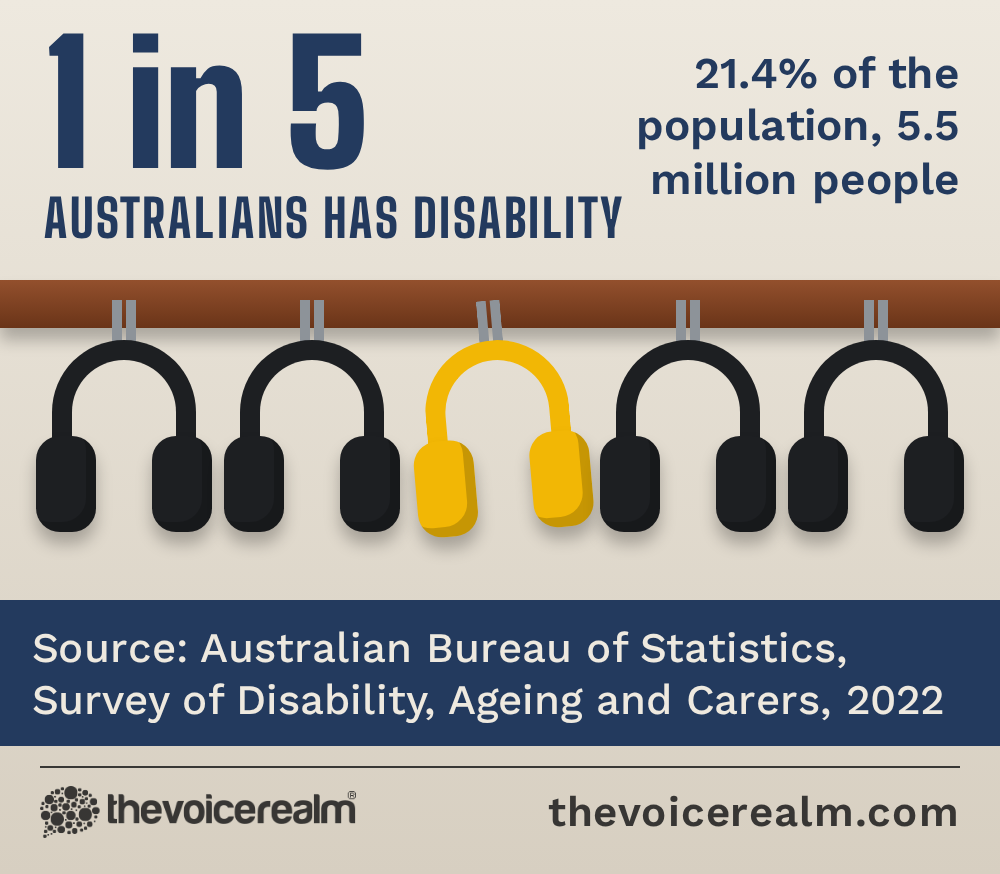
That slice has never matched the audience. The Australian Bureau of Statistics’ 2022 Survey of Disability, Ageing and Carers found “there were 5.5 million Australians with disability in 2022. This is 21.4% of the population”. Every government campaign, every bank explainer, every health app and every workplace training module is heard by that audience, and plenty of those listeners would like to hear someone who shares their experience now and then.
 VOICEMASTERACADEMYFirst read to first booking.Twenty modules. The first one is free.Start free
That has real consequences for working artists. Scripts about the NDIS, accessibility, aged care or workplace inclusion land best when the voice carries genuine understanding rather than a brochure smile. Some clients now go further and ask for lived experience outright, the same pull towards authenticity we’ve seen in casting for accents, ages and regions. If you’re a voice over artist with disability, your perspective is part of what you bring to a booking, and it’s your call whether to mention it in your profile.
If you’re not, the lesson still applies. The reads that land are the ones that sound like a person who understands what they’re saying. That’s what a student station quietly teaches every week, one show at a time.
© The Voice Realm
Four habits worth stealing from a student desk
Home studios have made it possible to work from anywhere, and that’s a good thing. But a home booth is a lonely place to learn. Nobody tells you the read was flat. Nobody waves you down at the end of the song. Nobody says your second take was better than your fifth.
A station does all of that, so here’s what we’d borrow from the student playbook, even if you’ve been doing this for twenty years.
- Work to the clock. Read a thirty second script against a timer until you can land it within half a second, three times running.
- Read cold every day. Grab copy you’ve never seen and record it once with no rehearsal. Clients judge first takes more often than you’d think.
- Talk to one person. Good radio hosts picture a single listener. Your read warms up the moment you stop addressing a crowd.
- Keep going. Practise recovering from a stumble without stopping, then decide afterwards whether the line needs a pickup.
The note a station lecturer probably gives more than any other is “you sound like you’re reading”. If that’s the one you keep hearing, our guide to fixing a flat, monotone read goes through the exercises that help most.
© The Voice Realm
Perth is a voice over town now
There was a time when a Perth voice over artist had to fly east for the big sessions. That’s mostly history. Clients across the country audition and book Western Australian voices online, and the time difference has quietly turned into an advantage: a brief that lands late on a Sydney afternoon still has a few working hours left in Perth, so the read can be back before anyone on the east coast has logged off.
Perth also has its own sound. Plenty of national brands want a voice that doesn’t sound like it came out of a Sydney agency, and resources, tourism, health and government clients in the west often want someone local who says the place names properly. Our page of voice over artists in Perth and WA is where a lot of those clients start listening.
Stations like BOOM are where the next lot of those artists get their start. Some will stay in radio, some will move into podcasting and production, and some will end up reading the training and safety videos that every big WA employer needs, where a clear, friendly voice is the difference between a module people finish and one they click through.
© The Voice Realm
Our take
Here’s our read. The voice business tends to treat student radio as a nursery, somewhere people go before the real work starts. Emily Prior’s nomination is a good reason to look again. She’s doing what the best voice over artists do: using a microphone to make a listener feel seen. The report doesn’t say how many people tune in to BOOM, and it doesn’t need to. The skill is the same at any audience size.
Three things stand out to us. The craft is learnt by doing it, on air, against a clock, with someone listening. The voices this industry needs next won’t all sound like the voices it had. And a public vote is a fair test of the one thing clients really buy: can a stranger hear you once and want to hear you again?
If you’re a working artist, spend an hour with a student or community station this week. You’ll hear rough edges. You’ll also hear people having a go, live, with no second take, and that’s worth remembering the next time you’re on your fourteenth pickup of the same line.
What to do this week
Listen like a student again. Pick a student or community station and listen for a full hour. Write down one thing a host does that you don’t, whether it’s a transition, a warmth in the voice or the way they read a sponsor’s name.
Record a cold read every morning. Five days, five scripts you’ve never seen, one take each. Listen back on Friday and you’ll hear what clients hear when they open your audition.
Time everything. Most commercial scripts live or die at thirty seconds. If you can’t land one inside half a second without rushing, keep practising until you can.
Tell your own story if you want to. If you came up through student or community radio, or you bring lived experience to certain kinds of scripts, a line in your profile helps the right clients find you. It’s your choice, and nobody should feel they have to.
Give something back. Student and community stations often welcome working professionals for a workshop or a guest spot. And if you’d like to back a Perth voice, RadioToday says voting is open on the championship’s website until Friday 20 November.
A note for clients. If your script is about disability, accessibility or inclusion, say in the brief that you’d welcome auditions from voice over artists with lived experience. You’ll hear the difference in the first ten seconds.
Sources: “Perth radio student Emily Prior nominated for international People’s Choice Talent award.”, RadioToday, 10 November 2026; “Survey of Disability, Ageing and Carers, 2022: key findings in plain language”, Australian Bureau of Statistics.
Ready to get booked?
See the jobs open right nowAbout Sarah Robbins
Sarah Robbins writes for The Voice Realm about finding voice over work, home studios, casting and the business side of voice acting.