Blog
Voice Over Studio
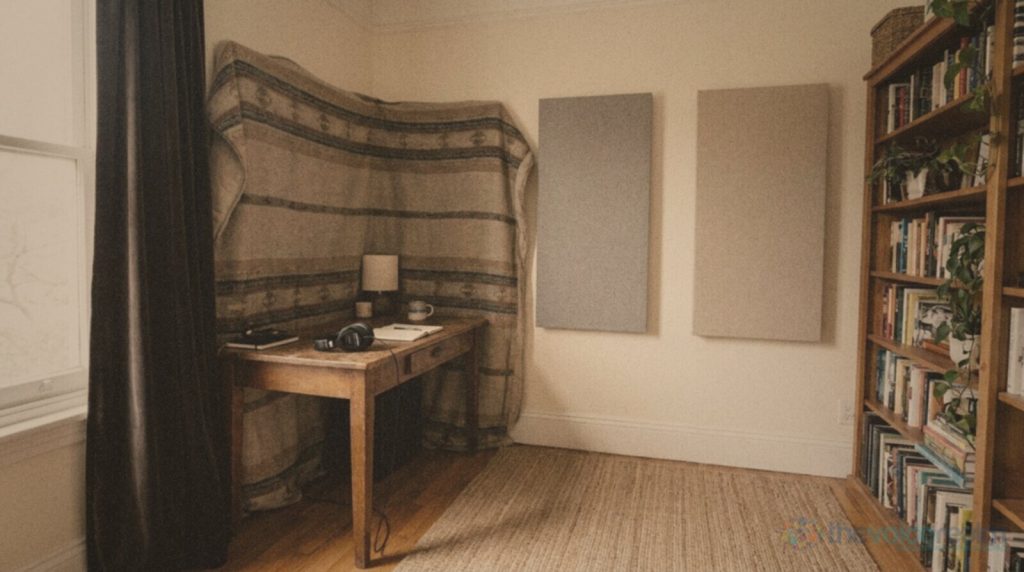
How to Treat a Room for Voice Over: Start Behind You
Why the wall behind you matters most, how sound bounces into the mic, and what a treated room looks like from free to fully kitted.
Why the wall behind you matters most, how sound bounces into the mic, and what a treated room looks like from free to fully kitted.
The voice-over genre written into accessibility standards, what the read asks for, the published rules, and how to practise it without a client.

Mic technique that prevents edits, punch and roll, the five passes in order, and the loudness and noise numbers a client will measure.
Barks, efforts and branching dialogue, what the 2025 union deal changed for AI consent, and how to get through a session with your voice intact.
What e-learning narration really asks for, the 20 decibel standard every training file has to clear, and how to land your first course.
Real hours behind a finished hour, how ACX pays narrators in 2026, the technical bar every file must pass, and a ninety-day plan for your first book.
What the voice clinics actually say about hydration, humidity, warm-ups and vocal naps, plus the two-week rule every working voice actor should know.
Casting directors and agents weigh in on demo length, file order, format and slating your name. Your first 30 seconds do the work.
Script changed after the voice-over was recorded? How to handle late rewrites, version control, timing and stakeholder notes without chaos.
Why briefs like warm, natural and conversational leave actors guessing, and how to write direction that says who's listening and why.