Blog

Philippa Ratcliffe, a Speech Language Therapy Consultant, wrote in her article that “singing is a more athletic, energetic and elite form of speech. The voice is a wonderful, mysterious instrument, hidden from view, so all the singer has to rely on is sound and feel.” Professional singers like opera people are oftentimes advised to protect their most prized possession, their voices. Recording artists like Mariah Carey are known to get enough sleep to take care of their vocal cords.
Voiceover actors, however, are not required to stand on stage to belt out tunes, or even whistle in front of thousands of fans, but your voice is equally important! Your voice is your product, it is your brand. It is your physical resume. Maintaining the health of the voice is one of the ways that could help voice actors secure ongoing projects, and to achieve career longevity.
Several articles are available online and it will not hurt much if you take the time to read them and follow the do’s and don’ts. One great example is a comprehensive article published by the National Institute on Deafness and Other Communication Disorders (NIDCD), and it is all about one’s voice (from what a voice is to how to take care of it). In addition to this, J. Michael King, MD, of Peak ENT and Voice Center in Golden, Colorado, discussed how voiceover actors can preserve their voice and provided valuable information for voiceover actors who are serious about the maintenance of their voice to secure long-term jobs in the industry.
This article will tackle the common injuries of the vocal cords, what voice actors can do specifically to take care of their voice, and much more.
What causes most vocal cord injuries
Question: What are the most common injuries to vocal cords?
The two most common causes of vocal cord injury would be from overuse and/or misuse leading to abnormal straining (muscle tension). In some cases, this can lead to vocal fatigue and vocal cord nodules. Nodules are small bumps on both cords, similar to a callus.
Question: What can a voice actor do specifically to take care of their voice? Are there any tips you can provide?
Good vocal technique is the key. Any professional voice user would be wise to work with a vocal coach or speech pathologist trained in voice, specifically. Posture, pitch, breath support, etc. are all key factors that professionals should understand in order to preserve their voices for the long-haul. Resting their voice between performances and not overusing it when it’s not important. Avoid excessive talking or singing, for example, during the “off time” to rest one’s voice is important. Avoid abusive behaviors like smoking and excessive drinking. Alcohol and caffeine in larger quantities can do damage and are known risk factors for reflux that can affect the voice.
Smoking, drinking and your vocal register
Question: Many male voice actors believe smoking and drinking lower their register and can be beneficial to their career. What advice would you give to those voice actors?
 VOICEMASTERACADEMYLearn the craft in order.Module one is freeStart module oneTwenty modules, start to finish.
This is a risky behavior since both tobacco and alcohol are risk factors for cancer. There are far healthier ways of learning to lower one’s register if that is important (working with a good vocal coach or speech pathologist). Even if someone’s lucky enough not to develop cancer, there are other benign lesions caused by tobacco and alcohol that can cripple one’s voice. Polyps or precancerous plaques, for example, can develop on the cords that impair vocal fold vibration. I would never advise anyone to drink alcohol and/or smoke simply to change pitch.
Question: How can someone naturally lower their register for voiceover jobs that require it?
No secrets, it just takes practice and working with a good coach or speech pathologist to learn how to do it safely. Done incorrectly, this may lead to muscle tension/straining as noted in the first question.
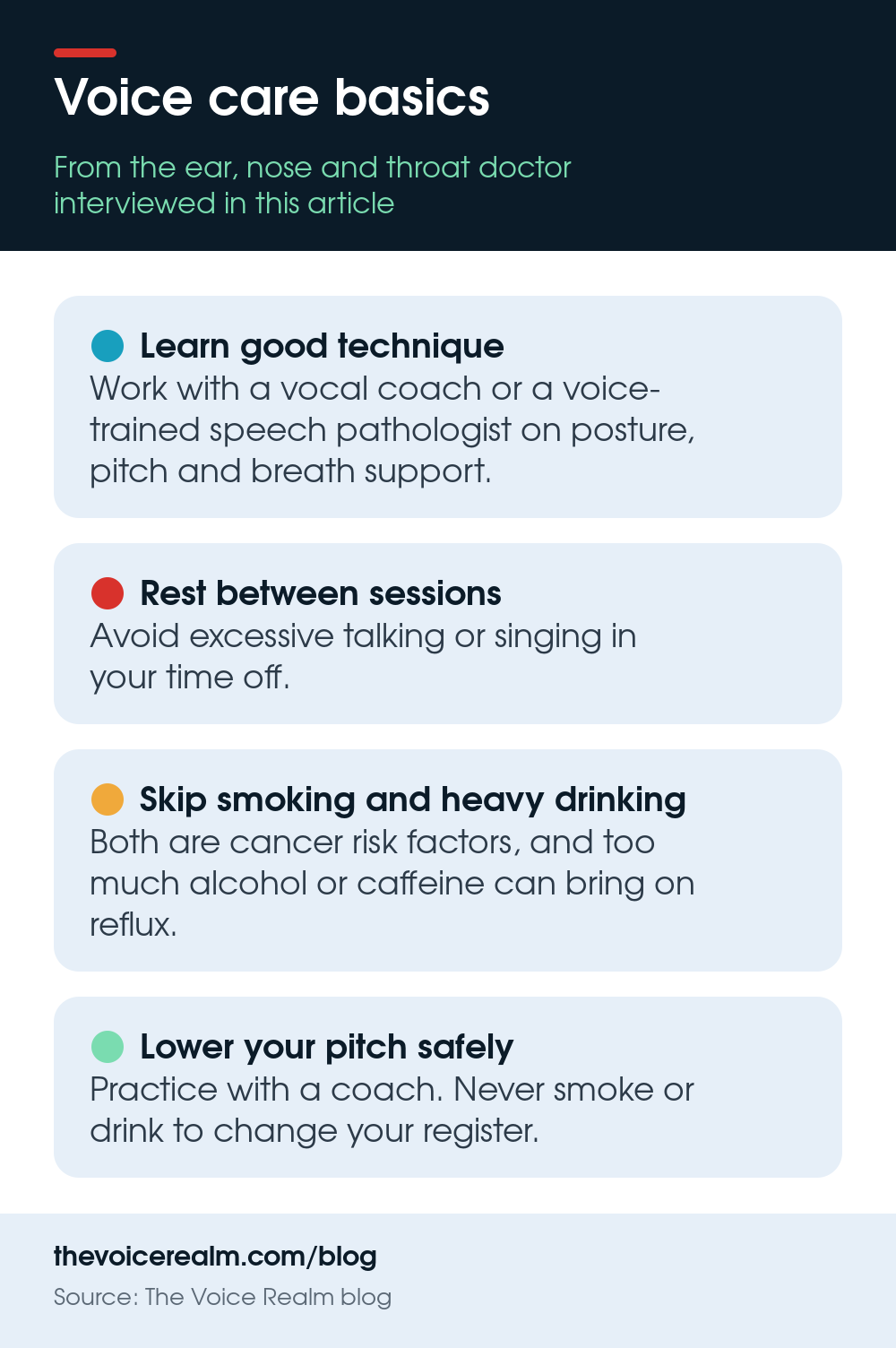
The doctor's short list © The Voice Realm
Thank you, J. Michael King, MD, for providing this valuable information. Have you faced any challenges with your voice while working? How did you manage to cope with it? What tips can you give to the aspiring voice actors?
Sources: nidcd.nih.gov; peakentandvoicecenter.com.
Ready to get booked?
See the jobs open right now