Blog
This is for voice actors who’ve been asked to read for an audio drama, a fiction podcast or a radio play and suddenly realised it isn’t a commercial or a narration job. Nobody wants your announcer voice here. They want a scene, played by people who listen to each other, in a world the audience builds out of nothing but sound.
Good news: if you’ve done any stage or screen acting, most of what you know still works. What changes is where the audience sits. In audio drama it sits inside the microphone, and everything you do is measured by how it sounds from there.
It’s a play nobody can see
On stage you’ve got your body, the set and the lights to tell people where you are and how you feel. On a microphone you’ve got your voice, your breath and the distance between you and the mic. That’s the whole toolkit, and it’s more than enough.
Drama training treats this as its own skill. The Pearson BTEC unit in audio performance acting, used in British colleges, lists the things students are assessed on, and alongside pace, diction and characterisation it names “using microphones to suggest distance/intimacy” and “reacting to, and incorporating sound effects and ambient noise.” That’s a fair summary of the job. You’re acting, and you’re also placing yourself in the scene for the listener.
The other big shift is scale. A stage performance is pitched to the back row. An audio performance is pitched to one person wearing earbuds, often from a few centimetres away. Big theatrical choices sound like shouting at someone in a lift. Pull the size in, and keep the truth.
The microphone is where the listener is standing
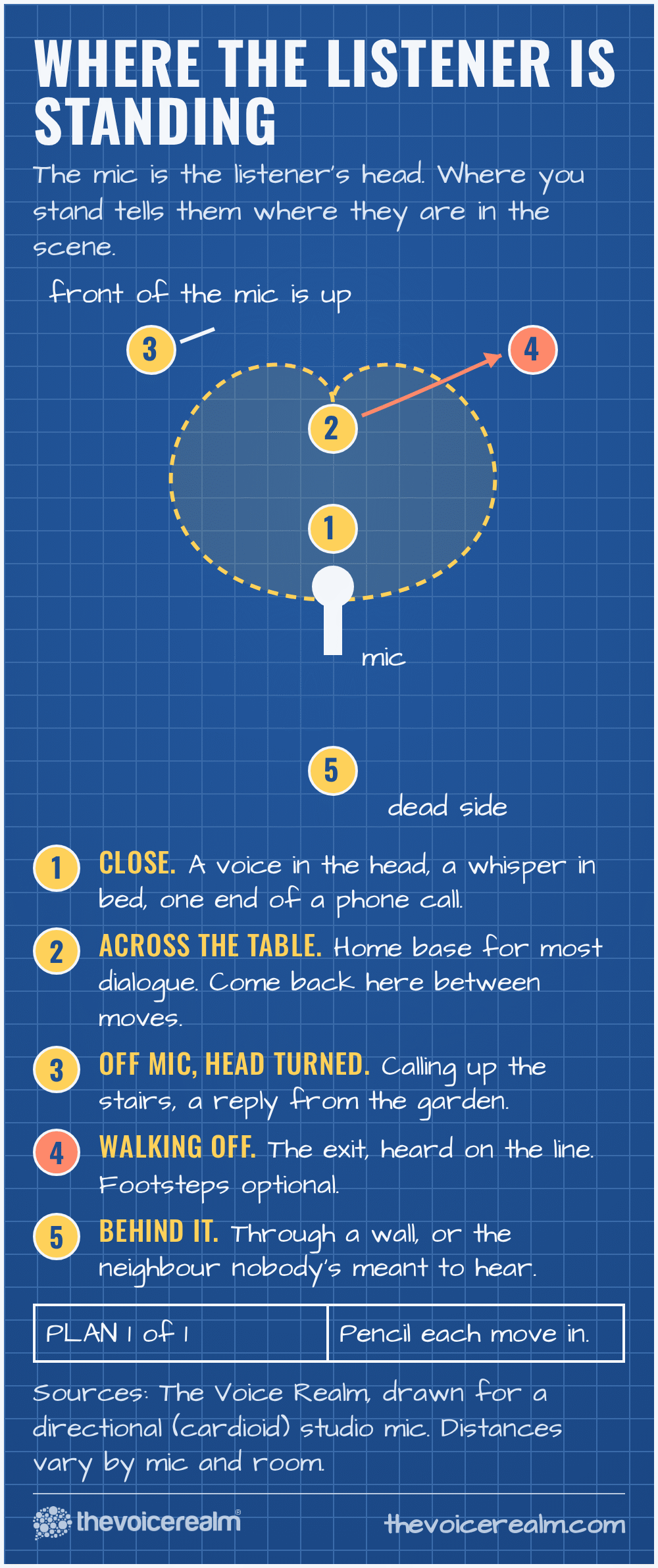
Think of the mic as the listener’s head. Every step you take toward it or away from it moves the audience through the scene, and nobody has to read out a single line of stage direction.
Directors call these positions on mic and off mic, and they’ll often move you during a scene: start back for the entrance, come in for the argument, drift away as the character gives up. Your job is to make those moves smoothly and without noise, and to keep acting while you do them. When you walk away, keep pushing the voice toward the mic so the words still land, the way you’d keep facing front while exiting a stage.
Shouting is the one move that usually goes the other way. Play a big shout at full volume, right into the capsule, and you’ll overload it and hurt yourself. Turn your head off the mic or step back, give the shout its full energy and let the distance do the rest. If the script has a lot of screaming in it, our guide to screams, grunts and death cries will keep your voice in one piece across a long session.
© The Voice Realm
Doors, stairs and teacups: playing the physical
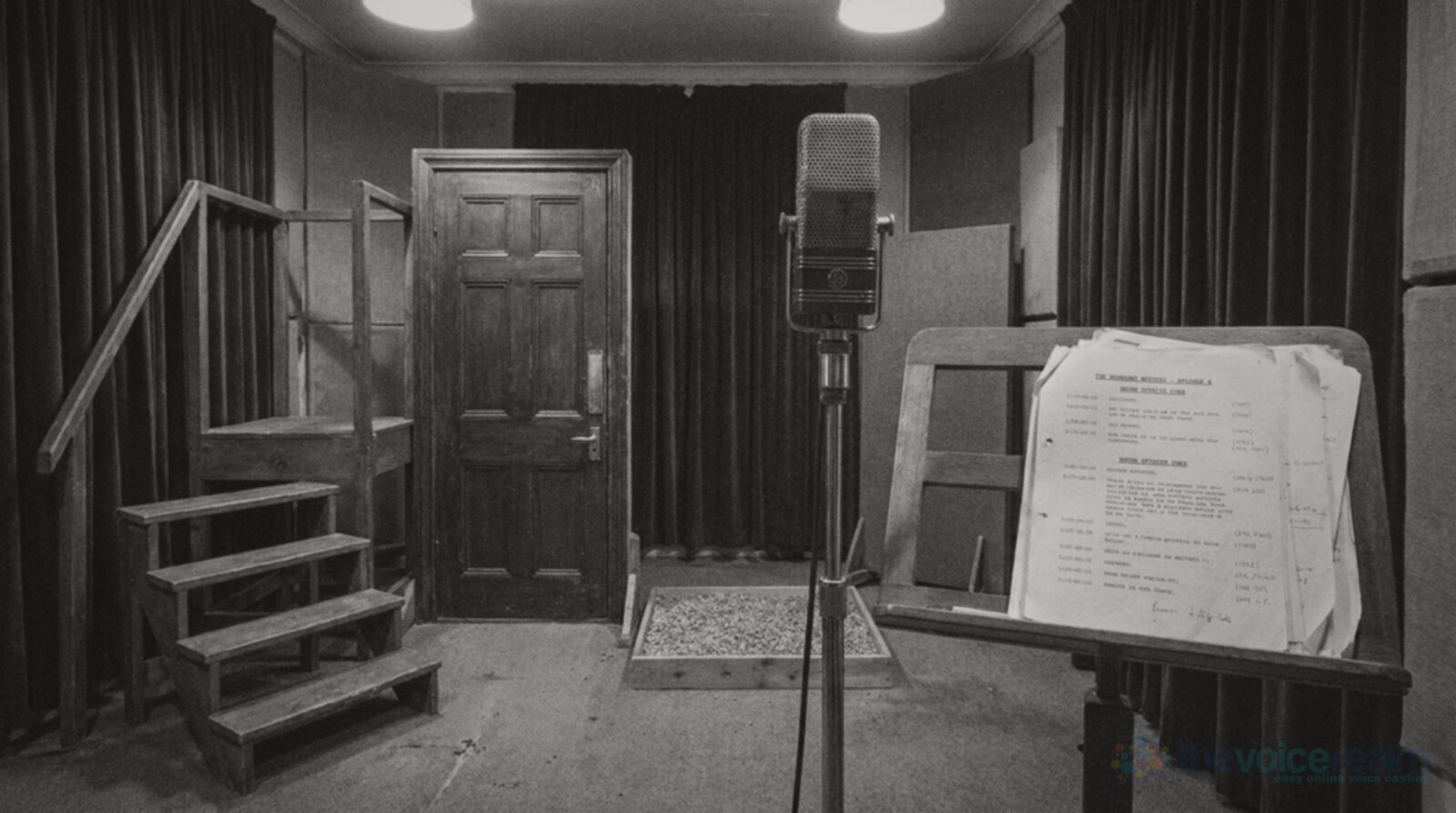
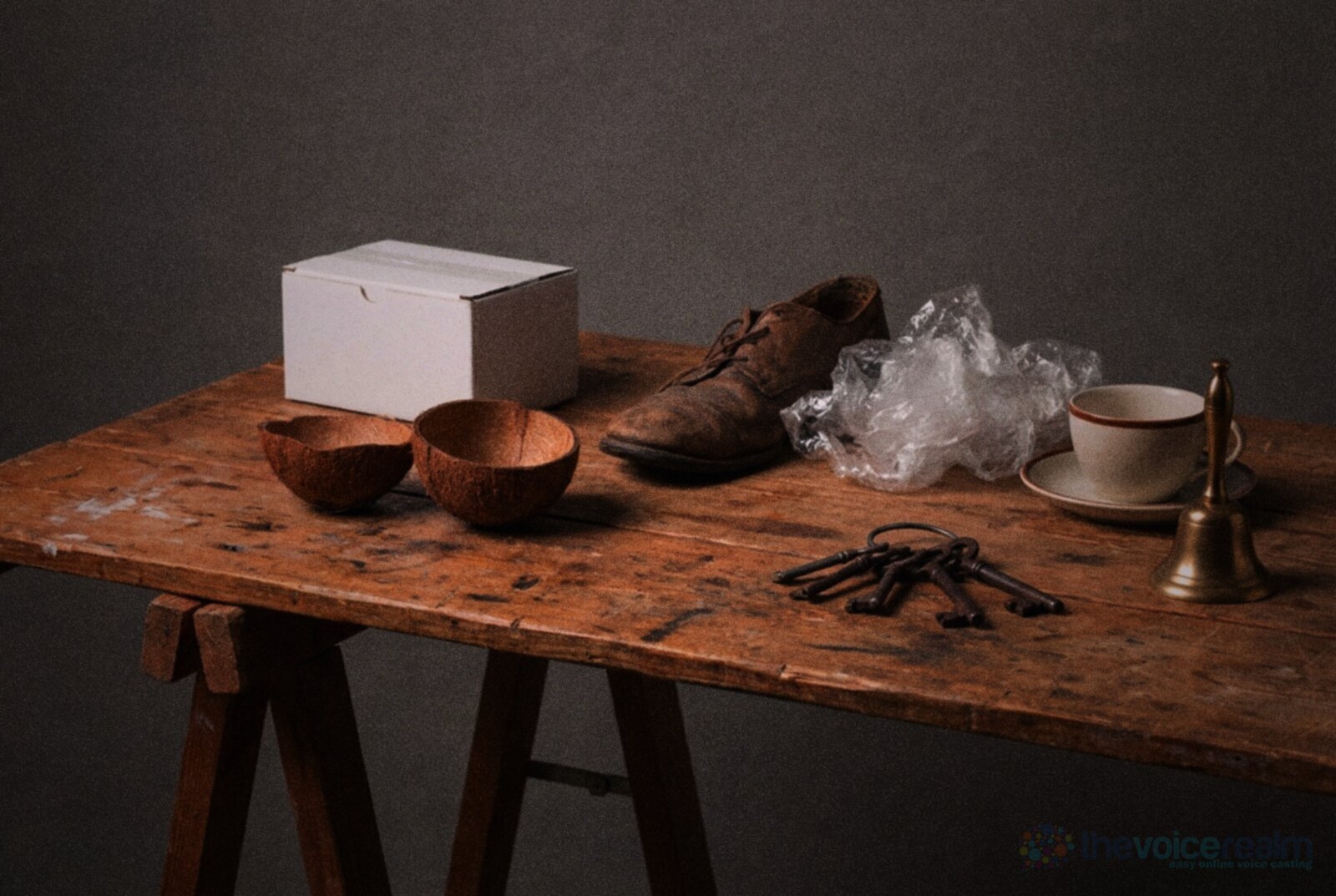
Audio drama has a long tradition of spot effects, the sounds made live in the studio while the actors perform. That’s why a radio drama studio can look like a junk shop: a door in a frame that opens onto nothing, a few steps that go nowhere, a tray of gravel to walk across, cups, keys and coconut shells.
Even when the effects are added later, the actor’s body still has to do the moves. If your character’s climbing stairs, your breath should climb with them. If they’re carrying shopping, the effort should be in the line. If they’re eating, you might actually eat something, or at least let your mouth do the shape of it. Listeners hear the difference between a line said standing still and a line said while doing something, even if they couldn’t tell you what it is.
Keep the physical stuff tidy, though. Rustling clothes, creaking shoes and jangling bracelets all end up on the recording. Wear soft, quiet clothes and leave the jewellery at home.
© The Voice Realm
Reading a radio script without sounding like you’re reading
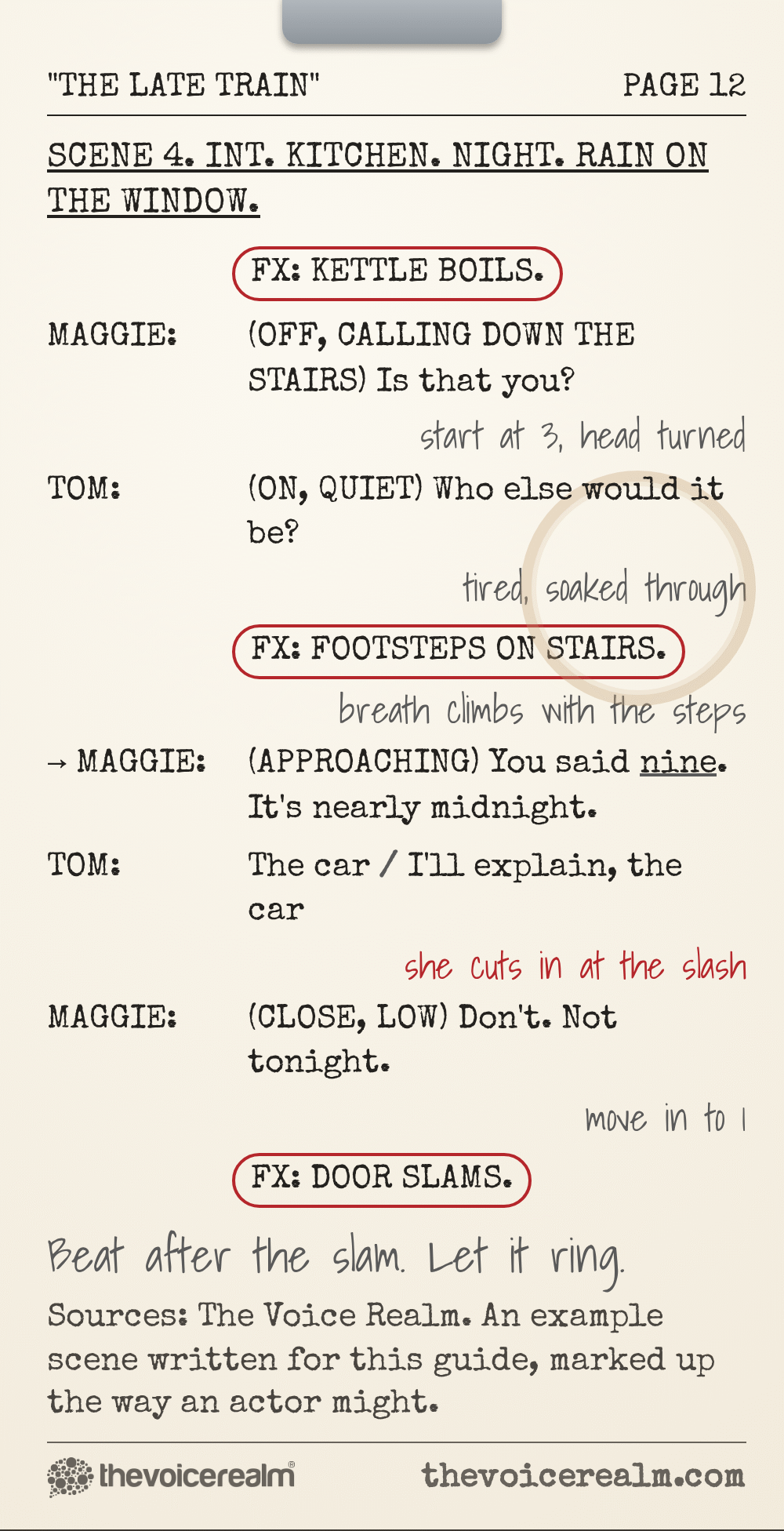
An audio drama script looks a bit like a screenplay crossed with a stage play. Scene headings tell you where you are, character names sit above their lines, and sound effect cues are marked so everyone knows what the audience will hear around the words. Read the whole script before the session, not just your lines. The FX cues and the other characters’ lines are the world your character is reacting to.
Mark it up in pencil. Note where you start on mic and where you move. Circle the sound cues you need to react to. Put a small mark wherever your character interrupts or is interrupted, so the overlap feels natural rather than polite. Our guide to marking up a voice over script shows the basic marks, and they all work here too.
Then learn the scene well enough that you’re not glued to the page. You don’t need to be off book, but you should be able to look up, think and react. A paper script also needs one practical habit: turn pages silently, ideally between lines, or loosen the staples and slide each page away when it’s done.
© The Voice Realm
Listening is half the part
The BTEC unit’s list of ensemble skills includes “listening/reacting” and “use of space,” and that order isn’t an accident. In a scene, the most believable moments come from reacting to what the other actor actually did, not to what you expected them to do.
- Talk to someone. Every line is aimed at a person in the scene, even if they’re on a different continent on the other end of a remote session.
- Hear it, then answer. Let the other line land before you reply. The thought should happen on the recording.
- Breathe like the character. Running, scared, half asleep: the breath tells the listener before the words do.
- Make the distance mean something. Move on or off mic because the character moved, never just because the script said so.
That’s easiest in a room together, which is how a lot of traditional radio drama is made. In a remote recording you might be alone, playing against a read-in, a recording, or a director reading the other lines. Treat whatever you’ve got as a real scene partner. Leave room for their lines, react on your face and in your breath, and don’t race to your next cue.
 VoiceEditSuiteThe audio editor that learns how you breathe.Auto Clean Up keeps the best take of every line, cuts false starts and retakes, and quietens breaths the way you would.See how it worksLearns from numbers, never your audio. Never used to train AI.
Small reactions matter more than you’d think: a laugh under someone else’s line, a breath before you decide to speak, a sigh. Directors often ask for these separately so the editor can drop them in, and they’re part of the performance, not extras.
© The Voice Realm
Working with the director through the glass
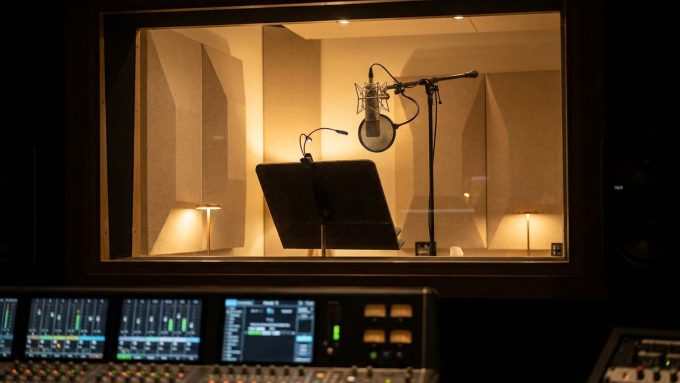
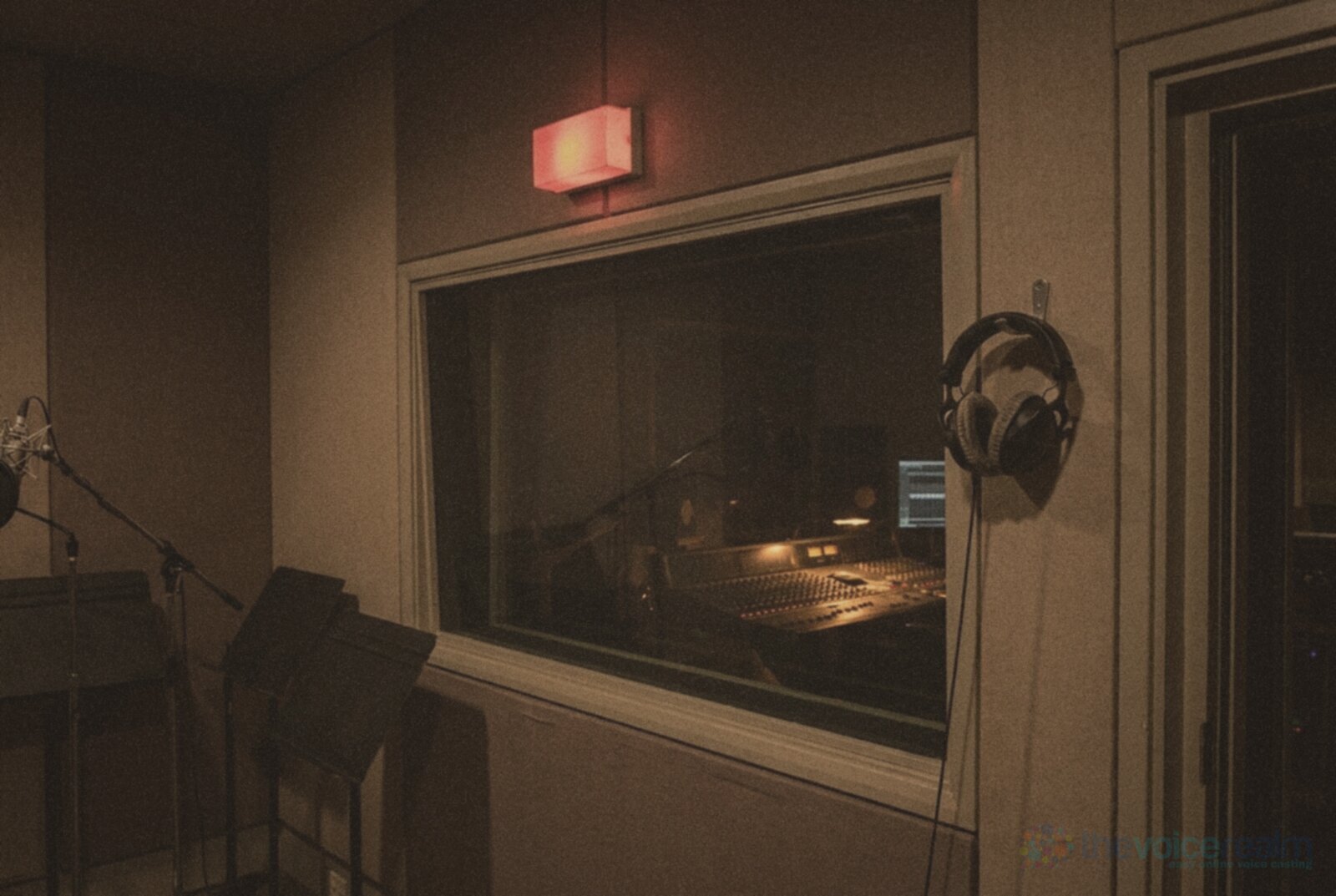
In a studio, the director usually sits in the control room behind a window, speaking to you through your headphones on talkback. A red light means you’re recording. Between takes, you’ll get notes that sound tiny (“a bit more worried”, “pick up from her line”) and change the whole scene.
Take the note and play it. Don’t explain why you did it the other way, and don’t ask for a long discussion while the clock’s running. If you’re not sure what they want, one short question is fine. If you’re new to directed sessions, our guide on taking direction in a live session covers the etiquette.
Doing it from home
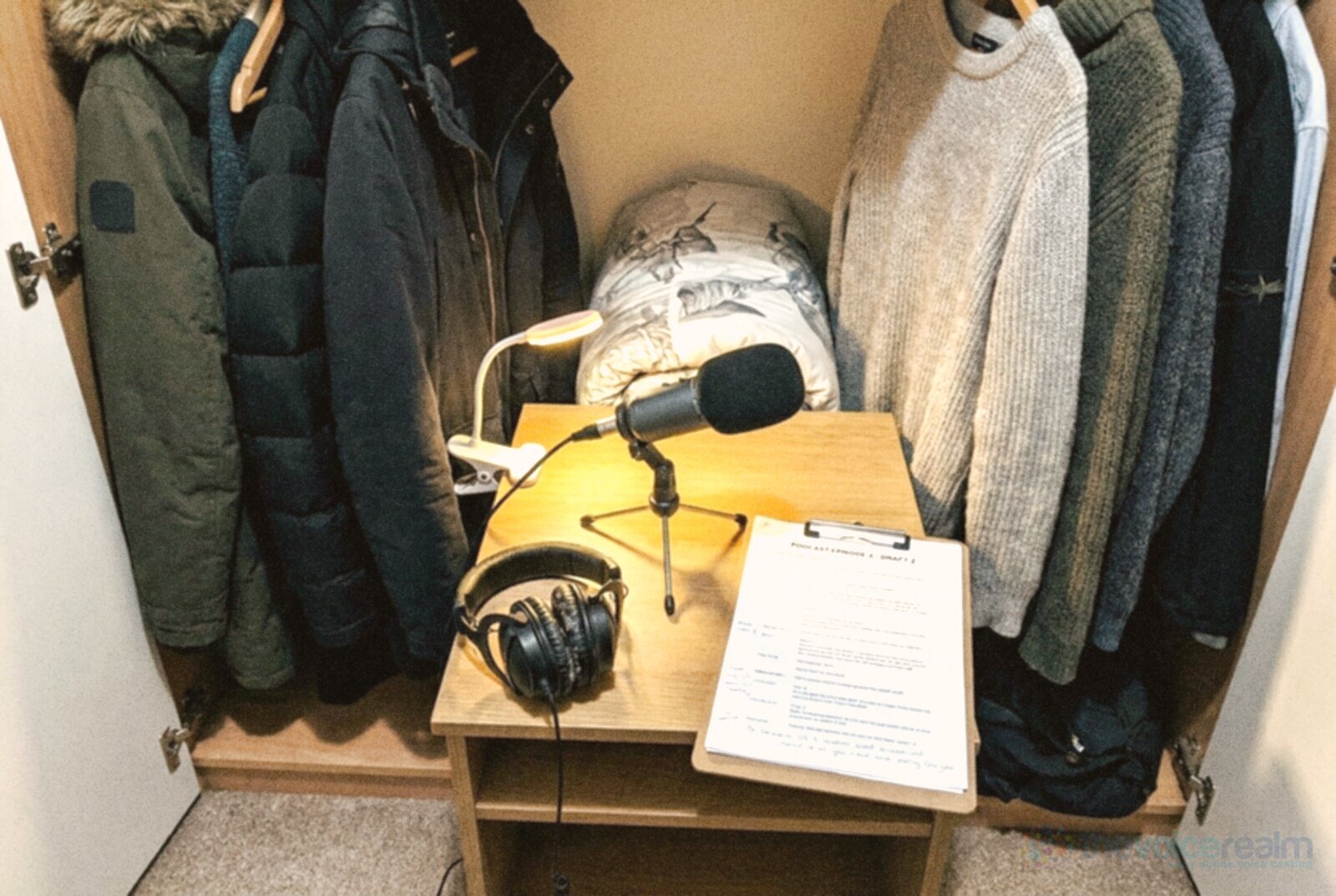
A lot of independent audio drama and fiction podcasting is recorded remotely, with each actor in their own home studio. That brings a few extra jobs. Your sound has to match everyone else’s well enough that the editor can make you share a room, so keep a steady distance for normal dialogue and only move when the scene moves.
Record a few seconds of room tone at the start, give clean breaks between takes, and slate pickups clearly. If you need to suggest distance in a small space, turning your head works better than walking away, because walking away in an untreated room adds that cupboard sound instead of distance. A wardrobe full of coats is a surprisingly good place to record dialogue. If the production uses a live link for direction, our guide to getting ready for a remote session covers the tech.
© The Voice Realm
Where the work is, and how actors break in
In the UK, the BBC still records radio drama with a company of actors, and it has run a competition for drama school graduates for decades. Royal Birmingham Conservatoire describes the Carleton Hobbs Bursary as a scheme “specifically for voice actors” that “has been run by the Radio Drama Department since 1953,” and lists its “two-stage selection process: The submission of pre-recorded solos, and a live online audition of duologue and sight-reading.” Bristol Old Vic Theatre School says the award “aims to identify distinctive, versatile radio voices to form a nucleus of new talent.” Even if you’ll never apply, that’s a useful picture of what drama producers listen for: a solo that shows range, a scene that shows listening, and confident reading on sight.
Elsewhere, the work is spread out. Independent fiction podcasts cast regularly, community and student radio groups make plays, and audio drama competitions and festivals need actors. Keep an eye on our voice over jobs board for character and dialogue work, and build a short audio drama scene into your demo so producers can hear you act with someone.
If you’re still at the start and want structured practice with feedback, Voice Master Academy is a good place to build the acting side before you go looking for scenes. And whatever you do, listen to a lot of audio drama. Close your eyes, notice where each voice is standing, and steal the best ideas.
Sources: Royal Birmingham Conservatoire, Birmingham City University, “Student wins BBC radio job”; Bristol Old Vic Theatre School, “Sasha Wins Prestigious BBC Carleton Hobbs Award”; Pearson Edexcel, “Unit 22: Audio Performance Acting”, BTEC Level 3 Nationals in Performing Arts.
Ready to get booked?
See the jobs open right nowAbout Sarah Robbins
Sarah Robbins writes for The Voice Realm about finding voice over work, home studios, casting and the business side of voice acting.