Blog

Christmas advertising in Australia has started early again, and two of the biggest retail campaigns of the season have something in common. Neither one leans on a big booming announcer. One hands the talking to real shoppers. The other lets a long summer lunch do the talking, with barely a word said.
If you’re an Australian voice over artist, that might sound like bad news. We don’t think it is. Here’s our read on what Big W and Myer have put on air this year, where the professional voice still sits in ads like these, and what to do about it before the Boxing Day scripts start landing in your inbox.
Two retailers, two very quiet ideas
Big W’s campaign, “How good’s Christmas?”, was made by the agency 72andSunny and launched in late October. Mumbrella’s Zac Nikolovski reported that the hero films mix vox pops of shoppers, interviewed in store, with scenes of a figure the campaign calls “Christmas mum”. Real Aussies answer the question in the title, in their own words, with their own accents and their own pauses. It’s rolling out nationally across TV, streaming, YouTube, social and outdoor.
Big W’s chief customer and revenue officer Ryan Gracie put the brief simply. “This year our mission is to help families win Christmas,” he said.
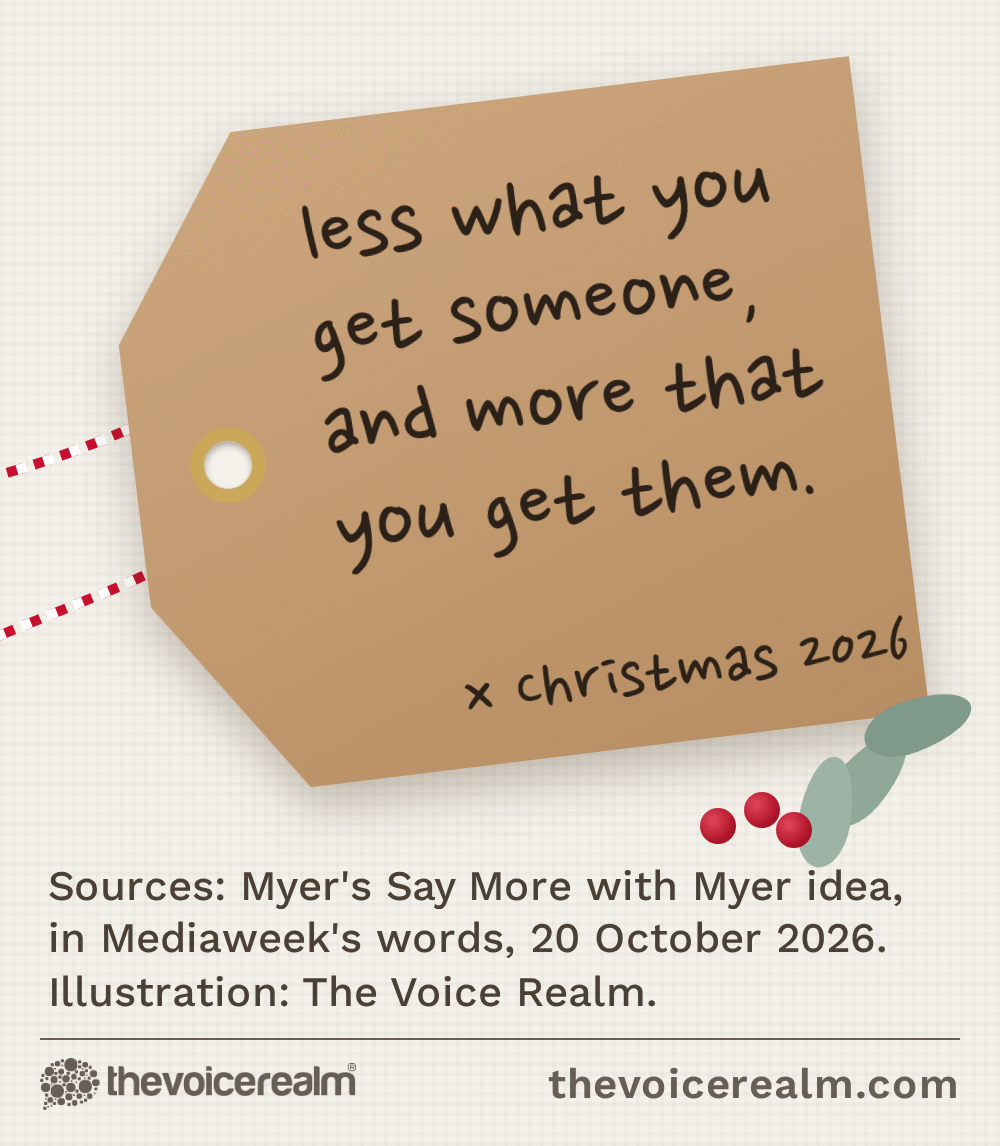
Myer went somewhere different but just as soft. Its “Say More with Myer” campaign, developed by Myer’s creative director Kristen Hancock with support from Howatson+Company, is built around a long summer Christmas lunch. A granddaughter paints her grandmother’s lips red. Two boys won’t let go of their teddy bears. A daughter tries on her mum’s sunglasses. Each small moment turns into a wrapped gift with a handwritten note. Mediaweek’s Alisha Buaya summed up the idea as gifting being “less what you get someone, and more that you get them.”
Myer’s chief customer officer Amanda McVay told Mediaweek: “Say More with Myer is built on something we all know to be true.” The films run in 30 and 15 second cuts across TV, YouTube, outdoor, social, radio and online, with placements at major train stations in Sydney and Melbourne.

© The Voice Realm
Where does the voice over go when shoppers do the talking?
Here’s the thing that stood out to us. Neither trade write-up mentions a voice over at all. In Big W’s case, the shoppers are the voice. In Myer’s, the pictures and the notes carry the story.
That’s a real trend, and it isn’t new. Vox pops feel honest. A mum in a trolley aisle saying “how good’s Christmas” in her own flat, sunny Aussie vowels has a kind of credibility no script can buy. Brands know that viewers have heard a thousand smooth announcers say the word “festive”, and they’ve learnt to tune it out.
So it’s fair to ask whether the professional voice is being written out of the season. Our answer is no, but the job is changing shape. The voice isn’t always the star of the spot now. It’s the glue, the close, the version that runs on the radio, and the one that comes back on 26 December when the tone flips from feelings to sales.
The last five seconds still need a pro
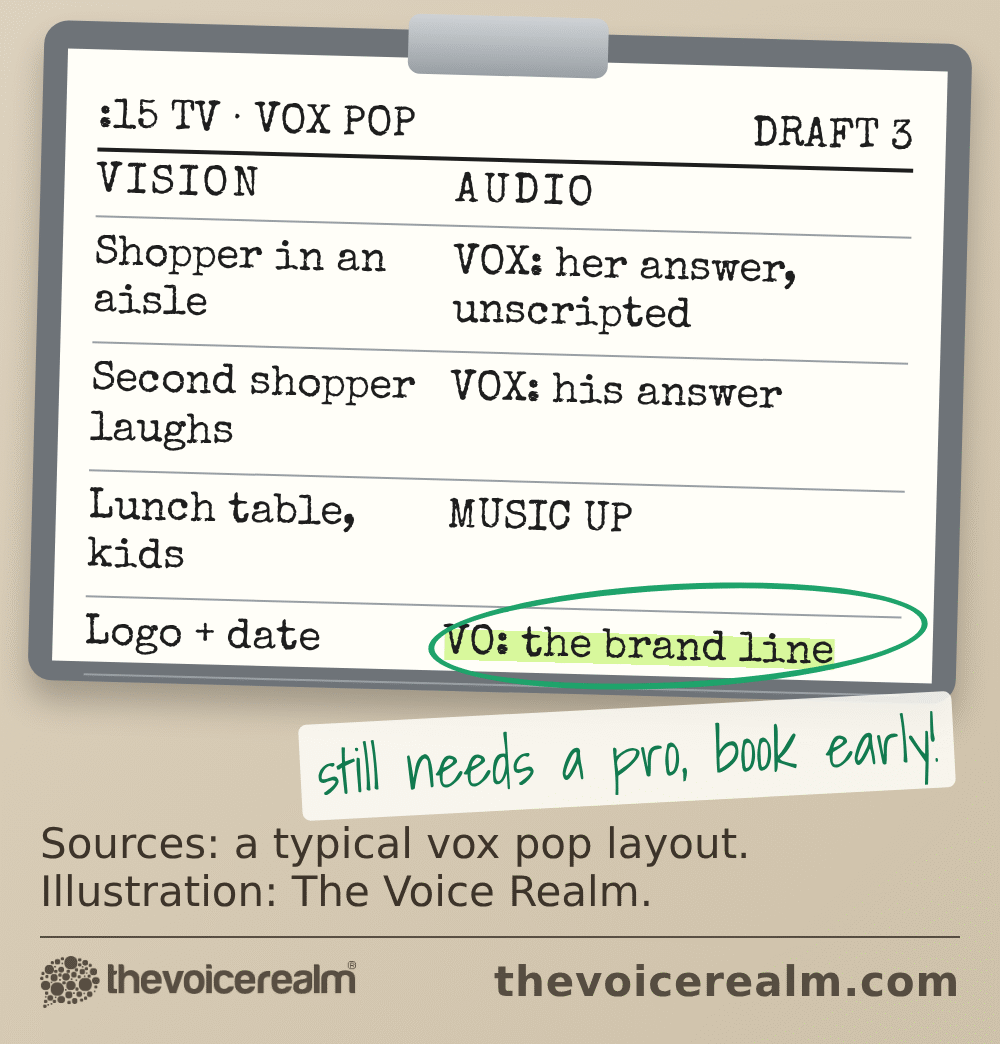
Watch enough vox pop ads and you’ll notice how they tend to end. The real people do the warm middle. Then something has to land the brand, the offer or the line that ties it all together. Sometimes that’s a super on screen with music. Often it’s a voice.
That closing line is one of the hardest reads in advertising. It has to follow genuine, unpolished speech without sounding like a salesperson barging into a family gathering. If you come in too bright, you break the spell the shoppers just built. If you come in too flat, the brand disappears. The voice has to sound like it belongs to the same afternoon.
“The voice in a campaign like this isn’t there to shout over the family. It’s there to finish the sentence they started.”
The Voice RealmPost this quote
That’s a skill you can practise, and it’s why we think vox pop campaigns are an opening for the right Australian voice rather than a threat. A brand that has just spent money making its ad feel real won’t hire a voice that sounds fake for the last five seconds. It’ll go looking for someone who sounds like a neighbour.

© The Voice Realm
Radio is where the Christmas voice works hardest
Myer lists radio among its channels, and that matters for voice over artists. A TV spot can show a granddaughter painting her nan’s lips. A radio spot can’t. On radio, every picture the film relies on has to be carried by sound, and that usually means a voice describing, setting up or gently narrating the moment.
Christmas radio in Australia also has a rhythm all of its own. It’s breakfast shows, school holidays, long drives up the coast and the shopping centre car park at four o’clock on the 23rd. Spots get recut for different stations and different weeks, and retailers often want versions that sound right in one city and slightly different in another. If your campaign is built around the commuters walking past those station screens, there are plenty of voice over artists in Sydney who do that relaxed, unfussy morning read every single day, and the same goes for Melbourne and beyond.
For the artist, the practical point is speed. Christmas radio is usually written late, approved later and wanted yesterday. The voices who get rebooked in December are the ones who can turn around a clean, warm read the same afternoon, with a couple of alternate takes on the end line, without being asked.
© The Voice Realm
How to sound unscripted on purpose
If the ads around you are full of real people, your read has to sit comfortably next to them. That’s harder than it sounds, because a script on a page pulls you towards reading. A few things help.
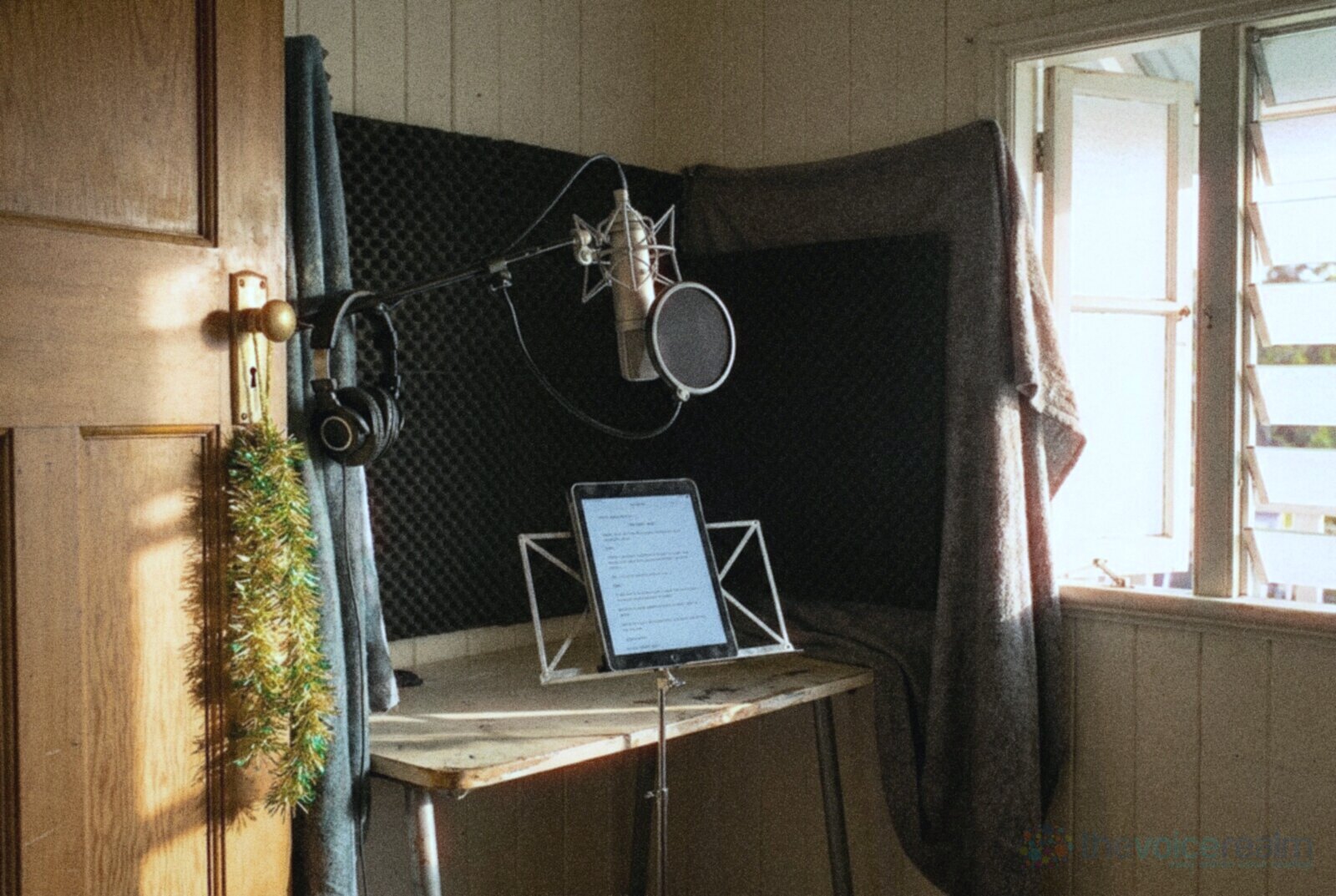
First, find the person you’re talking to. Not “the audience”, one person. For a Christmas spot that might be your sister on the phone while she’s wrapping presents. Say the line to her. Your pace drops, your pitch settles and the little sales lift at the end of each sentence tends to disappear on its own.
 VOICEMASTERACADEMYTwenty modules, one at a time.Breath controlHome studioCommercial techniqueAuditionsStart module oneNo experience needed.
Second, let the punctuation go a bit. Real speech runs past commas and stops in odd places. Mark the script where you’d actually breathe if you were telling the story, not where the copywriter put the full stops. We’ve written about sounding natural on a script in more detail, and most of it applies double at Christmas.
Third, record the line three ways and send all three. One a touch warmer, one a touch drier, one a touch faster. When the vox pops are being edited around your read, the producer will thank you for the choice.
And if the direction comes back as “warm, natural, conversational”, don’t panic. It means different things to different producers, and our piece on what that classic direction usually means is worth five minutes before a big December session.
© The Voice Realm
Then comes Boxing Day
Every soft, tender Christmas campaign has a sibling waiting in the wings. Once the presents are open, the tone of retail advertising usually flips. The long lunches and handwritten notes give way to sale dates, percentages and store hours, and the voice is suddenly front and centre again.
That switch catches a lot of voice over artists off guard. The same client who wanted you whispering warmth in November may want you crisp, quick and confident in late December. It’s worth practising both reads now. Take a sale script, any sale script, and read it at the pace of a 15 second spot without sounding rushed or shouty. If you can make “doors open at seven” sound friendly, you’ll be busy over the holidays.
There’s a casting side to this too. When a spot is built around mum, plenty of brands go looking for female voice over artists who sound like the woman in the kitchen rather than the woman on the stage. If that’s your natural sound, lead with it in your Christmas demos. If it isn’t, don’t force it. The brand that wants your sound is out there.
© The Voice Realm
For the brands writing this year’s scripts
If you’re a marketer or producer reading this, here’s our honest advice. Vox pops are lovely, and they work, but they’re not a whole campaign on their own. Somebody still has to say the thing you need people to remember.
Book that voice early. The good ones fill up in December, and a rushed casting call on the 18th is how brands end up with a voice that doesn’t match the warmth of everything else in the ad. Ask for a short custom audition on your actual end line, not just a demo reel, so you can hear how each voice sits next to the real people in your edit.
Think about the whole season at once, too. If you’re going to need a gentle Christmas line, a radio version and a punchy sale tag, booking the same voice for all three keeps the brand sounding like one company. It also makes budgeting simpler, and the published Australian voice over rates make it easy to see what each version will cost before you commit.
Finally, let the voice hear the vox pops. Send the rough cut with the script. A voice over artist who can hear what the shoppers sound like will pitch the end line to match them, and that’s the difference between an ad that feels like a family lunch and one that feels like an interruption.
Our take
The quiet Christmas ad is having a moment in Australia, and we’re glad. It’s nicer to watch, it’s more honest and it’s closer to how Aussies actually talk about the holidays. None of that is bad for voice over artists. It just raises the bar on the bit of the ad you’re still hired for.
The voice in a campaign like this isn’t there to shout over the family. It’s there to finish the sentence they started. Practise the soft end line, practise the brisk sale tag, keep your turnaround fast and your takes varied, and you’ll find December is still one of the best months of the year to be a working voice in this country.
How good’s Christmas? Pretty good, if you’re ready for it.
Sources: Mumbrella, “Big W hands the mic to Aussie mums in 2026 Christmas campaign” (26 October 2026); Mediaweek, “Myer unveils 2026 Christmas campaign with Howatson+Company” (20 October 2026).
Ready to get booked?
See the jobs open right nowAbout Sarah Robbins
Sarah Robbins writes for The Voice Realm about finding voice over work, home studios, casting and the business side of voice acting.