Blog
Australia’s radio and podcast awards opened entries for 2027 this week, and tucked into the category list is something voice over artists have wanted for years: a trophy with their name on it. The Australian Audio Awards have added Best Voiceover Artist, for commercials or longform narrative. There’s one condition, written in capitals in spirit if not in type. No AI. This piece is for Australian voice over artists thinking about entering, and for the producers and brands who’ll be choosing whose work to put forward.
We’re a voice company, so of course we cheered. But a new category is also a small test of the industry. Who enters, what they send and how the judges hear it will say a lot about how Australian audio values the person behind the microphone.
What’s new for 2027
Mumbrella’s Nathan Jolly announced the return of the awards this week. They’re run jointly by Mumbrella, Radio Today and Radioinfo, and the new award sits under the radio categories as “Best Voiceover Artist (Commercials or Longform Narrative)”. That second half matters. It means the category isn’t only for the punchy thirty second read. A narrator who carried a long documentary, an audio series or a branded story can stand in the same field as the person who made a supermarket spot sing.
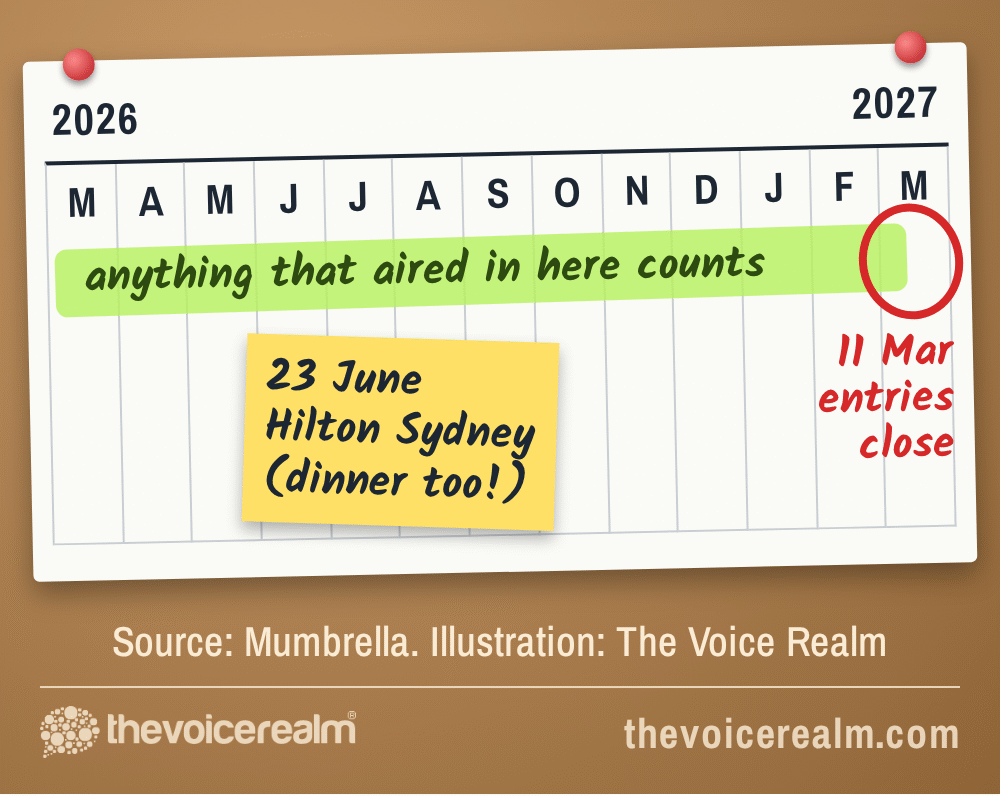
The dates are generous. The eligibility period runs from 10 March 2026 to 10 March 2027, and entries close on 11 March 2027. The ceremony is at the Hilton in Sydney on 23 June, and after many requests there’ll be a sit down dinner this time, so nobody has to balance a plate of canapes and an acceptance speech.
Steve Ahern, the Radioinfo publisher who heads the awards jury, explained why the awards exist at all. “We took a risk to fill the vacuum left after the other awards folded, and it was clear from the support we got that the industry really wanted these awards,” he said. When the awards were first announced last November, the organisers said they followed Commercial Radio and Audio’s decision to end the Australian Commercial Radio Awards. So this is a young event, one year old, still working out its shape. Adding voice over in year two says somebody was listening.
“By none, we mean none”
The line that got passed around was in an editor’s note at the bottom of the announcement. Jolly wrote that the organisers “request/insist on no AI use” for the best voiceover category, and admitted he was annoyed it needed saying at all. Then the bit that made us laugh out loud: “By none, we mean none.”
It’s a plain rule, and plain rules are good. A voice over award that might be won by a synthetic read would be a strange thing to hand out at a dinner. But the rule also raises a fair question about what counts. Plenty of everyday tools now have some machine learning inside them: noise reduction, de-clicking, breath control plugins, transcription for script checks. We’d read the spirit of the note as being about the performance. The voice in the entry should be a human voice, performed by a human, start to finish. If you’re unsure whether a tool you used crosses the line, ask the organisers before you enter rather than after you’re shortlisted.
We haven’t seen how entries will be checked, and the announcement doesn’t say. That’s fine. Most awards run on trust and on judges who’ve spent their working lives listening. Any experienced producer can tell a lot from a breath, a smile on a vowel, the way a line lands on a pause. The honest path is the easy one here: send real work, keep your session files, and be ready to show them.
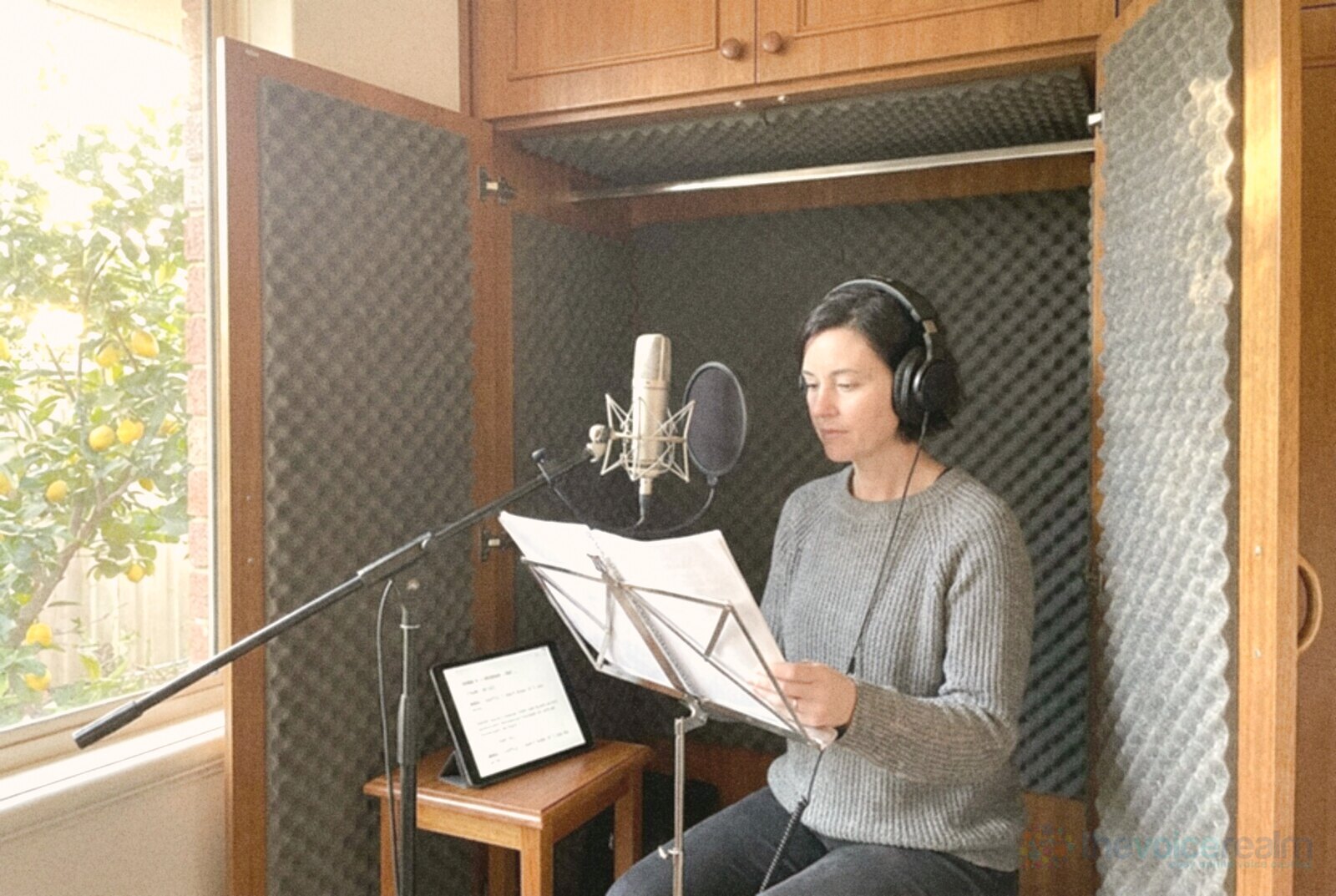
© The Voice Realm
Where these awards came from
Australia has had a gap in audio recognition for a while. Radio people lost their big night when the commercial radio awards ended. The organisers stepped into that space and opened their radio categories to commercial stations, the ABC, SBS and community broadcasters alike. Their judging has leaned on working practitioners, and in the last round the organisers said the highest scoring entry would go on automatically to the New York Festivals audio awards.
Voice over has been sitting just outside all of that. A radio commercial could win as a commercial, and the writer, the producer and the station took the bow. The voice that made it work often got a thank you in the speech, if they were lucky. Spring also brought the SONARR night in October, which put podcast, radio, audiobook and voice over under one roof, and between the two it’s starting to feel as if Australian audio has decided the performer deserves a seat at the table.
That’s a cultural shift as much as a prize. Clients notice what gets awarded. A category with a voice over artist’s name on it nudges agencies and brands to think about casting as a creative decision rather than a line on a quote.

© The Voice Realm
Choosing what to enter
If you voiced anything that went to air or was published inside that window, you’ve probably got something worth considering. The hard part is choosing. Here’s how we’d think about it.
Pick the read, not the client. A big brand name won’t win this on its own. The judges are being asked to rate a performance, so choose the piece where your choices are audible: a turn in the script you found, a laugh you let in, a quiet moment you held when the producer wanted it faster and then agreed it was better. If your best work was for a small regional business, enter that.
Commercials and longform are in one category, so think about what stands out in a pile. Twenty strong thirty second spots in a row can blur together for a judge. A longform piece that holds attention for several minutes might be the thing they remember on the drive home. Equally, a short spot with real wit can be a relief after a run of earnest narration. There’s no right answer, only a good reason for yours.
 VoiceEditSuiteAudible-ready files, graded the way ACX grades.Upload a chapter and ACX Audiobook Prep gives you the numbers Audible measures, or fixes the levels, adds room tone and hands back the compliant MP3.See how it worksYour recordings are never used to train AI.
Check you’re allowed to share it. Most commercial work belongs to the client, and an awards entry is a form of publication. A quick email to the producer or agency asking whether they’re happy for you to enter usually gets a yes, and often they’ll want to enter it themselves. If you’re in Western Australia, voice over artists in Perth and around the state have every reason to send work east too. Awards that sit in Sydney can feel far away, but the judges only hear the audio.
© The Voice Realm
Practical steps for voice over artists
You’ve got until March, which is a lot of time to do this properly and very little time once the Christmas break has eaten January. These are the jobs we’d do before the year ends.
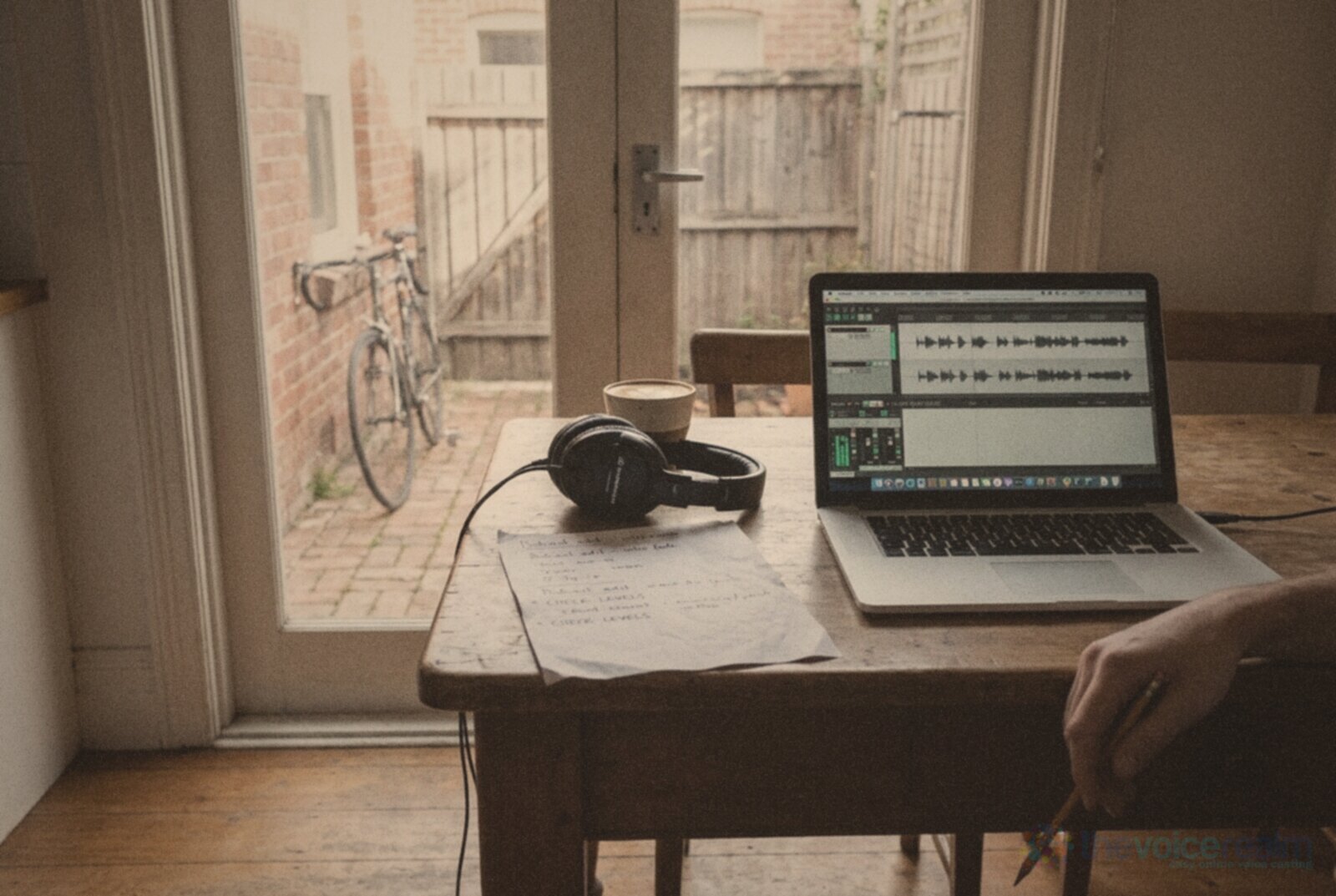
- Make a list. Go back through your invoices from 10 March 2026 and write down every job that aired or was published. You’ll forget half of them otherwise.
- Get the final files. Ask producers for the finished mix, not your raw take. Judges hear the spot with the music, the sound design and the tag, the way listeners did.
- Ask permission early. One friendly email per client now saves a scramble in March, when everyone’s back at work and busy.
- Keep your proof. Hold on to your session files and raw takes for anything you enter, so you can show the read was yours if anyone asks.
Then listen to your shortlist with fresh ears. Put the three best on a playlist, walk away for a day and come back. The one you still enjoy on the fourth listen is probably the one. If you’re torn between a radio piece and a narration piece, ask somebody whose taste you trust and who wasn’t in the session.
Use the entry as a reason to tidy your demos too. Whatever you shortlist is, by definition, your best recent work. If it isn’t on your demo yet, it should be, and the same thinking that goes into putting together a professional demo applies here: lead with your strongest read, keep it short, let the work speak.
© The Voice Realm
For the people who book voices
Producers, agencies and in house teams will be entering their own work, and this is a nudge to put the voice forward as well as the campaign. If a spot did well, the artist who read it probably helped. Entering them costs an afternoon and earns real goodwill, the kind that gets you a faster turnaround the next time the deadline moves.
It’s also a good moment to look at how you cast. A brand that wants an award worthy read needs to give the voice something to play: a script with room to breathe, a direction that’s more than “warm but energetic”, and time in the session to try a second idea. Whether you’re after a radio or TV commercial voice for summer or a narrator for a long piece next year, the casting brief is where great reads start.
Longform buyers have the most to gain. Documentaries, brand films, museum audio and corporate stories often get a voice booked late and fast. Booking a narrator early, sending the script ahead and letting them ask questions is the difference between a read that’s fine and a read people remember. If you need to hear some options, you can browse longform narration voices and listen before you brief anyone.

© The Voice Realm
Our take
Here’s our read. A voice over category that insists on human work is a small thing on a long list of categories, and it might be one of the most useful things an Australian audio award has done in years. It tells clients the craft is worth celebrating. It tells young voice over artists there’s a stage for them. And it puts a clear line in the sand at a time when plenty of people are quietly testing how much of a read a machine can fake.
We’d like to see it work, which means entries. If the category gets a handful of submissions, it’ll be easy to quietly drop. If it gets a full field, from capital city studios and spare room booths in regional towns alike, it’ll be back in 2028 and it might grow into separate awards for commercials and narration.
So enter. Ask your clients to enter you. Pick the read that made you proud, not the one with the biggest logo. And if you’re a producer with a voice over artist who saved a campaign this year, put their name forward. They’ll remember it longer than the trophy.
Sources: Mumbrella, “Australian Audio Awards return, with entries now open” (26 November 2026); Podnews, “New Awards for the Australian Audio Industry” (20 November 2025); Podnews, “One hundred judges and one more new category in the Australian Audio Awards” (4 December 2025).
Ready to get booked?
See the jobs open right nowAbout Sarah Robbins
Sarah Robbins writes for The Voice Realm about finding voice over work, home studios, casting and the business side of voice acting.